TechXcelerate 2025: AI, Strategy, and the Future of Enterprises

On October 12, 2025, SDA Bocconi Asia Center, Mumbai, hosted TechXcelerate 2025, the flagship annual event organized by the Business Technology Club. The event brought together thought leaders, innovators, and students to explore how Artificial Intelligence is fundamentally reshaping the business landscape. This year’s theme, “AI, Strategy, and the Future of Enterprises,” reflected the growing imperative for organizations to integrate emerging technologies into strategic decision-making and leadership frameworks. Designed as a platform that bridges academia and industry, TechXcelerate fostered meaningful dialogue around how AI can drive innovation, enhance operational efficiency, and unlock sustainable transformation. (L-R) Suraj Shetty, Abhishek Farkade, Azhar Shaikh, Abhijit Dey The day featured an insightful panel discussion with senior leaders from banking, finance, and technology sectors, who explored how businesses can move beyond pilot projects to scale AI across functions and create lasting organizational impact. The distinguished panel was moderated by Suraj Shetty, Head of Customer Experience at Kissht, and included Azhar Shaikh, Executive Director, Product at JP Morgan; Abhishek Farkade, Senior Vice President & Chief Technology Officer at Jio; and Abhijit Dey, Senior Vice President at Axis Bank. The conversation delved into critical questions: How can leaders operationalize Generative AI? What does it take to develop AI-driven business models? And how can organizations prepare for a future defined by digital intelligence and agility? Following the panel, the Fireside Chat brought together Rajiv Belani, Chief Technology Officer at Moneycontrol, and Bidisha Banerjee, Executive Coach & Global Woman of Influence, for an engaging dialogue on curiosity, collaboration, and continuous learning in the era of AI and fintech. Mr. Belani shared valuable lessons from his journey leading technology at one of India’s largest digital finance platforms, underscoring the importance of adaptability and a growth mindset in navigating technological transformation. His insights resonated deeply with students eager to understand the human dimension of technology leadership. The event offered International Master in Business – Batch 14 students a unique opportunity to connect directly with senior industry professionals, gain first-hand insights into the real-world impact of AI, and understand how technology and business strategy converge to shape the future. TechXcelerate 2025 reaffirmed SDA Bocconi Asia Center’s commitment to nurturing future-ready leaders, those equipped not just to adapt to change, but to lead it with vision and purpose.
Rewarding Changemakers: SDA Bocconi Asia Center Expands Scholarship for Social Impact and Entrepreneurship
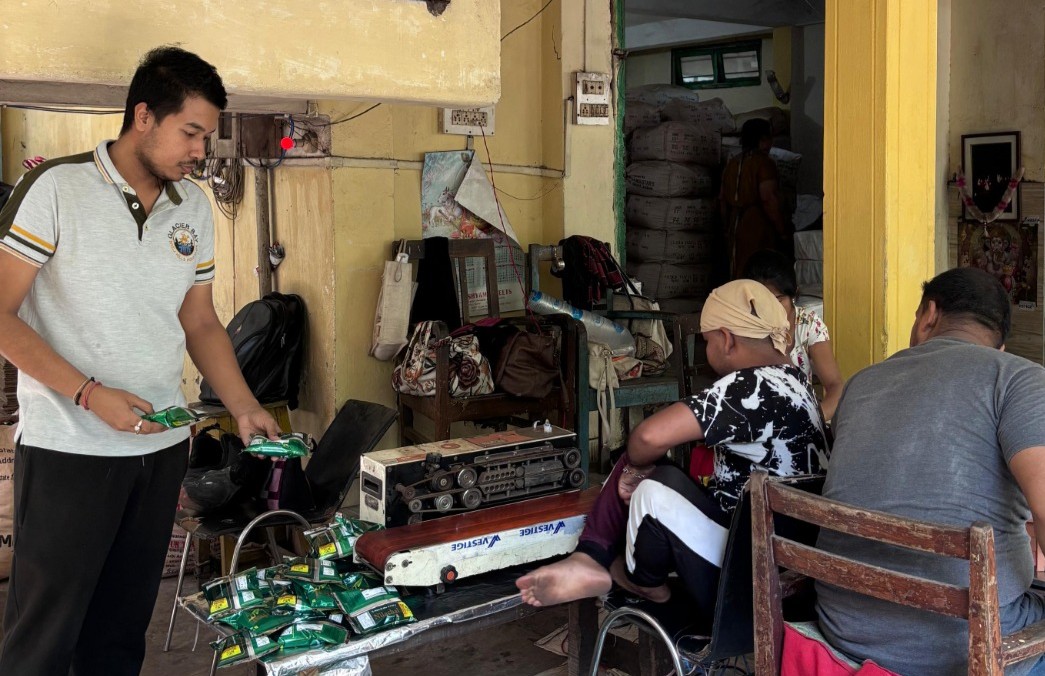
SDA Bocconi Asia Center is expanding its Scholarship for Extra-curricular Talent to recognize a new category of achievers: students who have demonstrated exceptional commitment to social impact and entrepreneurship. This enhancement broadens the scope of the existing Sports & Cultural Arts Scholarship, creating more opportunities for purpose-driven changemakers to pursue the International Master in Business (IMB) program. A New Path for Purpose-Driven Leaders Building on its commitment to identifying diverse talent, SDA Bocconi Asia Center now extends its Scholarship for Extra-curricular Talent to students who have: Made significant contributions through NGO work or community development initiatives Founded or led entrepreneurial ventures with a clear social mission at their core Driven measurable impact in addressing social, environmental, or humanitarian challenges This expansion recognizes that leadership excellence manifests in many forms—from athletic achievement and artistic expression to social innovation and community transformation. The scholarship now celebrates students whose entrepreneurial spirit has been channeled toward creating positive change, not just generating profit. What Sets Social Impact Apart While traditional entrepreneurship focuses primarily on economic value creation and financial returns, social impact entrepreneurship integrates a dual purpose: achieving both financial sustainability and measurable positive outcomes for society. This scholarship specifically recognizes ventures and initiatives where social mission drives the business model from its foundation. Whether you’ve worked hands-on with an NGO to empower underserved communities, launched a social enterprise tackling environmental challenges, or developed innovative solutions to pressing social problems through organisations like AIESEC or Rotaract, this scholarship is designed for you. Apply Now: Turn Your Impact Into Opportunity If you’ve already begun making a difference in your community and are ready to amplify your impact through world-class business education, now is the time to apply. Eligible candidates for the expanded Scholarship for Extra-curricular Talent include those who have: Demonstrated leadership in social impact organizations (like Rotoract or AIESEC) or NGOs Created entrepreneurial ventures with social or environmental missions Shown consistent commitment to community development and sustainable change Achieved measurable outcomes in their social impact initiatives Comprehensive Financial Support at SDA Bocconi Asia Center SDA Bocconi Asia Center is committed to making quality education accessible to deserving candidates. Beyond the expanded Scholarship for Extra-curricular Talent, the institution offers a range of financial support options: Scholarship Opportunities: Women in Leadership Scholarship – Supporting female leaders in business Scholarship for Extra-curricular Talent – Now including social impact and entrepreneurship alongside sports and cultural arts Dean’s Scholarship – Awarded to academically strong candidates and redeemed based on first-year academic performance, recognizing a consistent record of merit All scholarship selections are made by the scholarship committee, and their decisions are final. Take the Next Step Your journey as a changemaker doesn’t end with what you’ve already accomplished—it’s just beginning. Join a community of like-minded peers at SDA Bocconi Asia Center where you can refine your vision, develop advanced business acumen, and connect with a global network of social entrepreneurs and impact leaders. Ready to apply? Visit our website for detailed information about the IMB program and scholarship opportunities, or reach out directly to our admissions team at admissions@sdabocconiasiacenter.com.
Artificial Intelligence Interview Round: What to Expect and How to Ace It

The Artificial Intelligence Interview Round is designed to evaluate an applicant’s communication skills, clarity of thought, structure, and overall personality fit. The AI interview also aims to negate interviewer bias or variability. It also helps with mapping consistency, pattern recognition, and analytical problem-solving. Unlike a traditional face-to-face interview, this round allows the system to understand your thought process, gauge how you respond under light pressure, and get to know you on a deeper and more authentic level. The objective is to assess your competencies, technical knowledge match based on your application, essays and CV, how well you express your ideas, and how you reflect on your experiences and present yourself professionally. Key Details: Duration, Format and Difficulty The AI interview round is conducted entirely through an online dashboard, which the admissions team will provide via email. Applicants must log in, upload their CV, and ensure they have a stable internet connection. The round lasts approximately 20-30 minutes and consists of 13-15 questions. You can expect a mix of profile-based, situational, and behavioural questions. For example, the system may ask how you handled a challenging situation at work, what motivates you, your strengths and weaknesses, or any project mentioned in your resume. Essentially, anything written on your resume is open to discussion, so be prepared to speak confidently about all sections. Do’s and Don’ts Do’s: Sit in a quiet room free from background noise. Ensure you have a strong internet connection and proper lighting on your face. Test the video and audio of your laptop/desktop Maintain good posture and eye contact with the camera. Keep your resume handy for quick reference. Don’ts: Avoid reading scripted answers as the system proctors your integrity Do not rush through questions because it may show nervousness. Do not ignore the time limit; be concise but clear. Avoid multitasking or switching screens during the interview. Tips to Ace the Artificial Intelligence Interview Round Know your resume thoroughly and be ready to explain any detail, project, or experience mentioned. Know about the program and school in depth, this will help you align your thoughts on how and why you chose Bocconi Prepare for interview questions related to leadership, teamwork, and problem-solving. Take a few seconds before answering to structure your thoughts because clarity is important. Use the STAR framework (Situation, Task, Action, Result) to deliver well-organised responses. Most importantly, stay calm and do not be nervous. The system is designed to understand your natural communication style, not to find faults. This round is your opportunity to present your true self, so make it count. Give it your best, and all the best for your IMB process. LOG IN TO YOUR APPLICATION PORTAL
Why I Wrote CAT and What I Want to Tell CAT 2025 Aspirants

When I decided to write CAT, it was not a casual decision. It came from a phase where I wanted clarity, direction, and a future that gave me both purpose and financial strength. I wanted a chance to enter the best management institutes in the country, learn from brilliant minds, and build a career that would open doors for many years to come. CAT became my way of challenging myself. It was a step toward building a strong foundation for my future, especially when I felt unsure about my next move. Preparing for it taught me consistency, patience, and the ability to stay calm even when things felt overwhelming. These lessons helped me far beyond academics. As CAT 2025 approaches in just a few days, here is everything I sincerely want to share with anyone who is preparing right now. This is not generic advice. These are the things I learnt the hard way and the things I wish someone had told me. What I Would Tell Anyone Giving CAT 2025 Do not change your entire strategy now With only a few days left, the worst thing you can do is rebuild your method from scratch. Trust the efforts you have already put in. Make small corrections, not complete overhauls. Stay calm. The exam rewards clarity more than speed Every year, the real challenge is staying composed. A calm mind gives better accuracy and better decision-making. Choose your questions wisely CAT is not a test of solving everything. It is a test of solving the right things. One skipped question can save ten minutes and prevent panic. Do not push yourself too hard these last days Study, but avoid burning out. A tired mind performs poorly even if it knows everything. Section-wise Advice for CAT 2025 VARC Most aspirants panic here, but this is the section where a calm mind helps the most. What to do now Read two or three good articles every day to stay in rhythm Focus on comprehension rather than speed Do a few previous year RC passages just to remind yourself of patterns Revise your approach for summaries and para jumbles instead of learning new methods What to do in the exam Do not rush the first passage. If the tone or topic feels heavy, skip and return later Avoid overthinking answer choices. Go with the meaning of the passage, not assumptions Maintain a steady pace instead of rushing early and then freezing later DILR This section decides percentiles for many students because it can either calm you or shake you. What to do now Solve three or four sets every day, not twenty Revise the types of sets you know you can confidently handle Focus on selection of sets rather than trying to master new ones What to do in the exam Spend the first two or three minutes scanning all sets Pick the one that feels the cleanest and most structured Do not waste more than seven or eight minutes on a set that is going nowhere Your job is not to solve all sets. Your job is to secure marks QUANT This section feels scary for many, but it is predictable and rewards clarity more than tricks. What to do now Revise all basic formulas, but keep it light Practice moderate-level questions that build confidence Avoid very tough questions because they will only drain your energy What to do in the exam Begin with the topics you are strongest in Skip questions that look heavy or time-consuming Maintain accuracy Do not get stuck on algebra traps. Move quickly and trust your judgement My Final Message to Anyone Writing CAT 2025 You still have enough time to stay steady and organised. Focus on small, consistent revisions and keep your approach simple. Do not let the pressure of the last few days affect your confidence. Walk into the exam with a clear mind and a practical strategy. A calm, balanced attempt often leads to a better score than an overly aggressive one. You have prepared for this, so trust your process and give your best in the time you have. Likitha Erathuvathikal is currently pursuing the International Master in Business program at SDA Bocconi Asia Center. She is a B.Tech (Hons.) graduate in Computer Science Engineering with a specialization in Data Science, maintaining an 8.45 CGPA throughout her undergraduate studies. She achieved 9.2 CGPA in 10th class and 96% in 12th class, demonstrating consistent academic excellence. In CAT, she scored an impressive overall percentile of 97.36, with standout performances across all sections: 83.92 in VARC, 98.82 in DILR, and 95.75 in QA. Beyond management entrance exams, she has also attempted the UPSC 2024 and TSPSC 2024 preliminary examinations, showcasing her diverse academic interests. Professionally, Likitha worked as a QA Engineer at Bottle Technologies (2024) and has previously interned as an SDET at Frugal Testing (2022–2023) and as an SDE at HighRadius (2021), bringing valuable technical experience to her profile.
IEMB Batch 10: A New Generation of Global Leaders
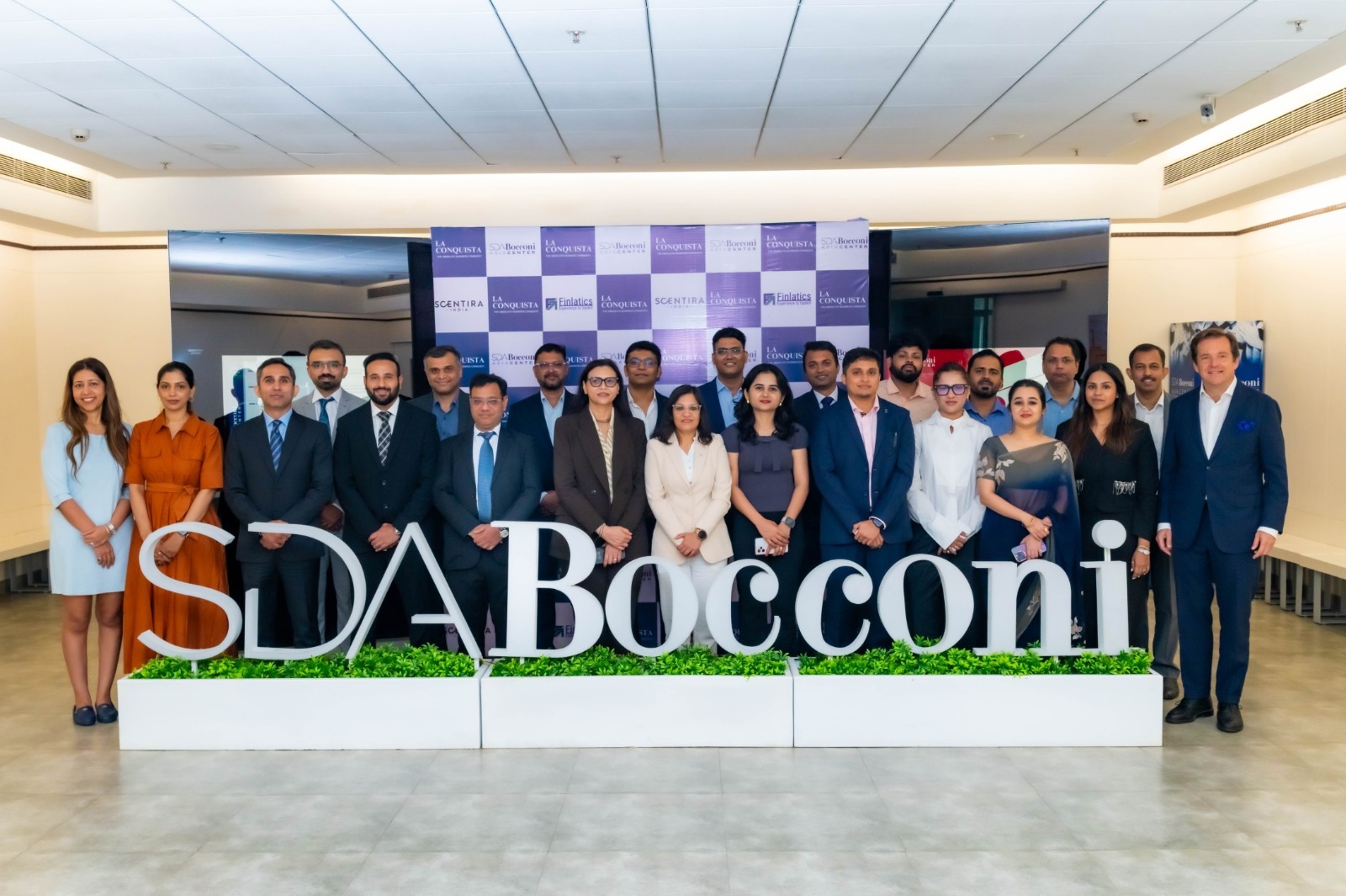
SDA Bocconi School of Management’s International Executive Master in Business (IEMB) program at SDA Bocconi Asia Center welcomes its tenth cohort, marking another milestone in cultivating transformative leadership across the Indian and Asian markets. As one of the leading Executive MBAs in India, this program brings together an exceptional group of seasoned professionals poised to redefine leadership in an era of unprecedented global disruption. A Profile of Excellence The incoming batch includes professionals from LVMH Moët Hennessy – Louis Vuitton, Tata Steel, Schneider Electric, Standard Chartered Bank, Adani Enterprises, and Infosys, with an average of 16 years of experience. Participants hold senior positions including Executive Directors, Chief Legal Officers, Vice Presidents, General Managers, and Heads of Digital Transformation. The cohort spans multiple domains—technology, digital transformation, strategy, operations, and legal affairs—across global corporations and Indian enterprises. Executive MBA in India Program Structure This Executive MBA in India is a 15-month program offering 60 ECTS credits, with classes held monthly over weekends in Mumbai, with additional online sessions. Participants also go to the SDA Bocconi School of Management, Milan, for 2 weeks. The executive master’s curriculum covers business fundamentals, management skills, and contemporary topics including digital transformation, AI, sustainability, and ethical leadership. Milan Immersion: A Global Perspective A defining feature of this MBA for working professionals is the two-week immersion in Milan, Italy, where participants engage in cutting-edge, research-based learning alongside company visits and interactions with senior business leaders. The second week offers specialized concentration modules in Banking and Finance, Business and Sustainability, Digital, or Made in Italy, attended alongside international candidates from the SDA Bocconi Executive MBA program. This global exposure provides participants with invaluable cross-cultural insights and expands their professional networks across continents. “In a world filled with challenges, the IEMB empowers Indian leaders to navigate complex landscapes, creating economic value while staying true to core values that drive sustainable impact.” —Professor Veronica Vecchi, Professor of Business Government Relations and IEMB Academic Director About SDA Bocconi Asia Center SDA Bocconi Asia Center has operated in Mumbai since 2012, representing SDA Bocconi School of Management’s 50-year tradition in executive education. The institution holds triple accreditation from EQUIS, AMBA, and AACSB, and ranks among Europe’s leading business schools. SDA Bocconi Asia Center’s Executive MBA program offers exceptional value with access to world-class faculty and a network of over 140,000 Bocconi alumni worldwide.
TEDxBocconiUMumbai 2025: Embracing the Unseen Possibilities

On August 3, 2025, SDA Bocconi Asia Center, Mumbai, hosted the eighth edition of TEDxBocconiUMumbai. Over the years, this event has grown into one of the most anticipated platforms at the Center, offering students and professionals an opportunity to engage with ideas that spark change and challenge assumptions. With the theme “What’s Next – Embracing the Unseen Possibilities,” this year’s edition was a celebration of resilience, reinvention, and purpose in a rapidly shifting world. The day began with a welcome address by IMB Edition 13 students, and hosts Poorva Arora and Priyanshu Jain, who set the tone by reflecting on the legacy of TEDxBocconiUMumbai and the power of ideas to transform perspectives. This was followed by the opening speech from Alessandro Giuliani, Managing Director of SDA Bocconi Asia Center, who emphasized that passion driven by purpose is the key to turning academic knowledge into real-world impact. Student organizers Sakshi Agarwal and Aadil Agrawal further shared their vision for the event, urging the audience to remain curious and courageous in exploring what lies beyond the known. The morning session introduced the audience to stories of resilience and reinvention from diverse fields. Professor Deva Rangarajan, faculty at SDA Bocconi Asia Center, and IESEG School of Management, Paris, drew upon his extensive experience in B2B marketing and sales to highlight how academia and industry can collaborate to navigate change. Viveck Shettyy, Founder and CEO of Indus Communications, spoke about his journey in media and branding while also reflecting on his role as a life coach who inspires balance in everyday lives. Former Naval Officer Shivani Shukla, now leading Digital Procurement Global Operations at Sanofi, shared her remarkable story of breaking barriers in the armed forces and later transitioning into corporate leadership. Closing the session was poet and storyteller Kanika Choudhary, who captivated the audience with narratives of vulnerability, healing, and identity, reminding everyone of the strength in authentic expression. Mr. Alessandro Giuliani, Managing Director, SDA Bocconi Asia Center TedX organizers, Aadil Agrawal & Sakshi Agarwal Cdr. (Retd.) Shivani Shukla, Head of Global Digital Procurement at Sanofi After a short lunch and networking break, the afternoon session resumed with a student performance that set the mood for another round of inspiring talks. Krishan Mishra, CEO of FPSB India, spoke about the importance of financial literacy and how professional excellence can create empowered futures. Utsav Malhotra, COO of Noise, described the fast-paced world of wearable technology and the ways in which consumer insights and digital innovation are reshaping the industry. Offering a different dimension, Dr. Sundeep Kochar, celebrity astrologer and life coach, encouraged the audience to realign themselves with wisdom that blends both cosmic and practical perspectives. The final speaker, composer and lyricist Samiir, left a lasting impression with his reflections on how creativity and music carry the power to move, heal, and inspire. As the event drew to a close, organizers Sakshi Agarwal and Aadil Agrawal returned to the stage to thank the School, speakers, sponsors, attendees, and the entire student TedX team. The formal proceedings ended with a networking and Hi-Tea session, where participants continued to exchange ideas and build connections. With this eighth edition, TEDxBocconiUMumbai reaffirmed its position as a space where students are not passive listeners but active participants in conversations that matter. By bringing together voices from academia, business, the arts, the armed forces, and beyond, the event once again highlighted that the future is not something to be feared. Instead, it is to be embraced with curiosity and courage, ensuring that knowledge, when shared, becomes the bridge to unseen possibilities.
Applications Open: Join the 15th Edition of International Master in Business 2026-28
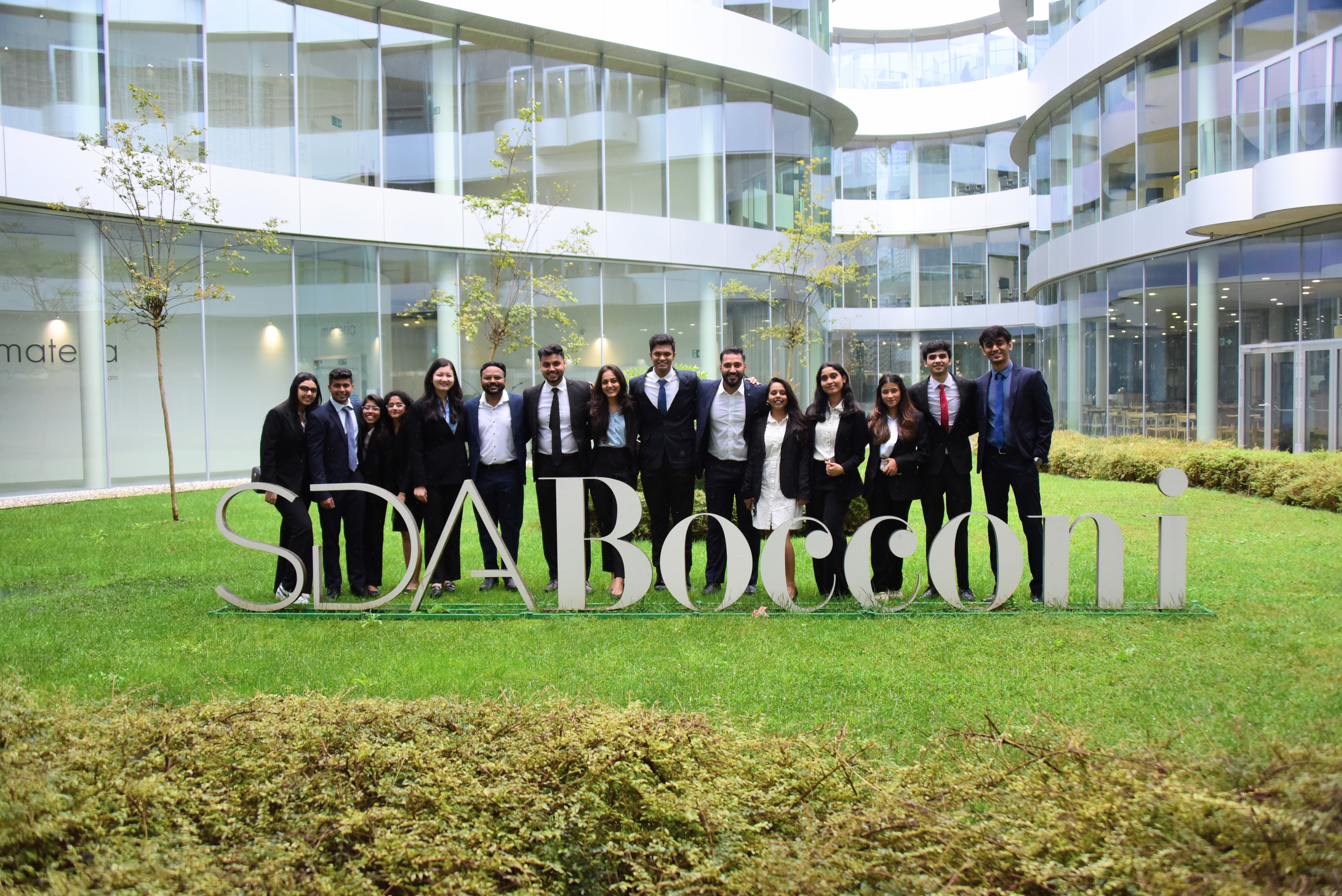
SDA Bocconi Asia Center is a pan-Asian hub in Mumbai that has been delivering Executive Education and Postgraduate Programs designed by SDA Bocconi School of Management, Italy, since 2012. Recognized among the top International MBA colleges, we bring over 50 years of management education excellence to the Indian and Asian markets. SDA Bocconi School of Management is ranked among the top business schools globally, recognized as the 4th best Global MBA Worldwide (2025) and 6th Best B-School in Europe (2024) by the Financial Times. With a legacy of academic rigor, cutting-edge research, and industry-relevant curriculum, we empower individuals and organizations through innovative managerial knowledge and a global perspective. The International Master in Business is a specialized 22-month master program that brings the global expertise and reputation of SDA Bocconi to India. As one of the premier International MBA programs in the country, it is designed for freshers and early career professionals with up to 5 years of work experience. The program combines business theory, simulations, case learning, international immersion, and corporate exposure to create truly global business leaders. The program comprises two 11-month modules and includes a compulsory 4-month international immersion at SDA Bocconi, Milan, Italy. Upon completion, participants receive an International Master in Business degree with 105 CPUs under the European Credit Transfer System (ECTS). Learn more Program Highlights: Contemporary Curriculum – Courses on Sustainability, Circular Economy, Digital Transformation, AI & ML, Design Thinking, and more World-Class Faculty – Learn from 400+ distinguished professors from Bocconi with extensive academic and industry expertise International Immersion – Compulsory 4-month term at SDA Bocconi, Milan, with immersive learning and cultural experiences Global Network – Connect with 140,000+ Bocconi alumni worldwide, including around 3,000+ in India. Our IMB cohort represents the best talent from across India, bringing diverse perspectives and experiences to create a rich learning environment. Our students come from prestigious organizations including Accenture, Amazon, Deloitte, EY, KPMG, HUL, TCS, and more. The cohort includes CFA candidates, Chartered Accountants, entrepreneurs, national athletes, award-winning artists, and published researchers. Career Development Services team ensures exceptional placement outcomes through a comprehensive 360-degree career curriculum. Our graduates are working across leading organizations including Deloitte, Microsoft, LÓreal, HDFC Bank, ICICI Bank, Hindustan Unilever, Samsung, Thoughtworks, Grant Thornton, and many more. Top hiring sectors include IT/ITES/Technology (30%), BFSI/Fintech (25%), and Consulting/Analytics (13%). As a Bocconi alumnus, you join a global network of over 140,000 professionals across 110 countries, opening doors to limitless opportunities worldwide. Admission Process Eligibility: Undergraduate degree in any discipline with a minimum of 55% across 10th, 12th, and graduation, and a minimum aggregate average of 70%. Accepted Tests: CAT Scores 2024/2025 GMAT scores (taken after January 1, 2023) NMAT by GMAC 2024/2025 GRE scores (taken after January 1, 2023) Bocconi Test Selection Process: Based on overall profile analysis, including academic ability, work experience, test scores, extra-curricular activities, and personal interview. The SDA Bocconi IMB admission process is holistic, considering multiple factors beyond test scores to identify candidates with leadership potential. Application Deadlines Round 1: November 21, 2025 Round 2: January 22, 2026 Round 3: March 23, 2026 Round 4: To Be Decided Application Fee: ₹3,500/- Scholarships & Financial Support Program Fee: ₹20,75,000 (excluding taxes) SDA Bocconi Asia Center offers up to 80% merit-based tuition waivers for eligible IMB candidates. Scholarships include: Merit-Based Tuition Waivers: Up to 80% for academically strong candidates Women in Leadership Scholarship Sports & Cultural Arts Scholarship Dean’s Scholarship: Awarded to academically exceptional candidates, redeemed based on first-year performance Ready to Transform Your Career? Join the 15th edition of IMB and become part of a global community of leaders driving impactful change. APPLY NOW
La Conquista 2025 – Where Academia Meets Industry

On August 10, 2025, SDA Bocconi Asia Center hosted its flagship annual business fest, La Conquista 2025 – Unlocking AI, Unlocking Potential. Managed by students of the International Master in Business program, this year’s edition drew over 4,900 registrations and attracted participants from India’s most prestigious institutions, including the IIMs, ISB, IIT Bombay, IIT Madras, XLRI, FMS, MDI, SPJIMR, NMIMS, Christ University, and Lady Shri Ram College. The energy on campus reflected the fest’s growing stature as a crucible of innovation where academia meets industry in meaningful ways. The event began with a high-powered panel on AI’s impact across industries. Corporate leaders, including Shipra Anand Mishra, Senior VP – HR Strategy at CIFDAQ, Sohil Karia, Co-Founder of Schbang and Founder of Mojek Money, CA Sandeep Mantri, CFO & Board Member at Protean eGov Technologies, and Atul Yadav, AI Coach & Entrepreneur at Outspark, shared how artificial intelligence is streamlining operations, reshaping innovation, and redefining the future of work, while also highlighting the human judgment and ethical oversight still required in its deployment. The session was moderated by Aditya Bhutada, student of the International Master in Business (IMB) Class of 2027, Edition 14. Specializing in prompt engineering and innovation, he helps businesses harness AI tools to drive growth and navigate the complexities of modern technology. From there, the spotlight shifted to the six case competitions, each grounded in live problem statements provided by leading organizations. Together, these challenges captured the complexity and breadth of business decision-making in an AI-driven world. In BizOps with Grant Thornton, students stepped into the world of agribusiness transformation. They were asked to design a resilient and sustainable grape supply chain for exports to Europe—an industry plagued by risks ranging from climate change and pests to price crashes and fragmented landholdings. The case demanded participants balance farmer profitability with supply chain efficiency by integrating cluster analysis, sustainability frameworks, and technology-enabled solutions. Luxury and tourism converged in LuxFeud with Fidenza Village, where participants had to devise an AI-powered digital marketing strategy to attract high-value Indian travelers to the Italian shopping destination, part of The Bicester Collection. By leveraging geo-intelligence, real-time personalization, and engagement across digital platforms such as Instagram and Indian travel portals, teams were challenged to strengthen Fidenza Village’s positioning in the highly competitive European luxury retail market. Consumer branding took center stage in Ignite with LoveChild by Masaba, a competition that tested participants’ ability to launch a new product line—whether fragrance, foundation, wellness, or grooming—while deepening reach in Tier 2 and Tier 3 cities. The challenge lay in crafting a complete go-to-market strategy that preserved the brand’s premium-yet-accessible identity, supported by AI-driven micro-market targeting, personalized campaigns, and inventory optimization. Finance was explored through two competitions. In FINnovate with Finlatics, students tackled investment risk analysis and portfolio optimization, decoding financial challenges to propose strategies that would improve overall business performance. In contrast, ProdPreneur with Mojek Money focused on data infrastructure for a fintech startup. Participants were asked to curate a reliable knowledge base from credible financial sources, structure it into a machine-readable format, and establish systems for accuracy, governance, and integration with AI tools—laying the groundwork for Mojek’s AI-powered assistant for Gen Z. Human resources innovation came alive in HRythm with Occams Advisory, where the challenge revolved around boosting employee engagement and retention. Faced with a score of just 3.5 out of 5 against a target of 4.2, Occams invited students to design a one-year, AI-enabled HR plan. Teams had to balance bold innovation with practical feasibility, quantify return on investment, and ensure strategies could be smoothly implemented in a fast-changing workplace. From supply chain design to luxury marketing, consumer branding to HR transformation, and financial innovation to data strategy, the six competitions captured the complexity of today’s business landscape. What united them was not only the use of AI as a transformative enabler but also the opportunity for students to solve real-world problems in collaboration with industry leaders. La Conquista 2025 was more than a showcase of talent—it was a celebration of collaboration. Students from the International Master in Business program at SDA Bocconi Asia Center worked alongside peers from India’s top institutions, exchanging ideas and perspectives that reflected both global exposure and local insight. The evening closed with cultural performances and festivities, but the true legacy of the event lay in its message: when academia and industry come together, innovation becomes inevitable.
Building with Purpose: Rachit Gupta on Open Source Leadership, GenAI Transformation, and the Future of Intelligent Enterprises

About the Series – For Your Insight This feature marks the first edition of For Your Insight—a thought leadership initiative by SDA Bocconi Asia Center. The series brings together perspectives from our students, alumni, faculty, and industry experts, showcasing stories that reflect the value of an SDA Bocconi education and the excellence we strive to deliver. Through real-world narratives and career journeys, For Your Insight explores how business leaders are navigating transformation, innovation, and responsibility in a fast-changing world. As artificial intelligence continues to reshape the global enterprise landscape, the demand for hyper-personalized, outcome-driven client engagement has reached an inflection point. According to McKinsey, organizations that successfully integrate AI into their operations can unlock up to 70% productivity gains, with personalization driving 40% more revenue compared to competitors. This dramatic shift underscores a deeper transformation in the role of technology leaders—from task managers focused on delivery to strategic partners leading enterprise-wide change. For professionals like Rachit Gupta, a current International Executive Master in Business candidate, who has spent over a decade working with Fortune 500 clients and building thriving open-source communities like Drupal Mumbai, this evolution has been both professional and personal. As he puts it, “It’s no longer just about digitization—it’s about reimagining business models and aligning technology with human-centered outcomes.” Having witnessed the arc from early Agile adoption to the onset of Industry 5.0, Rachit now champions a leadership style rooted in inclusivity, empathy, and governance-first innovation. Whether it’s embedding GenAI into decision intelligence or driving community-led tech for good, his approach exemplifies the kind of responsible leadership enterprises need—especially as AI adoption raises ethical, social, and regulatory concerns globally. In this conversation, we explore how Rachit’s journey—from co-founding open-source movements to shaping intelligent enterprises—mirrors the broader transformation of the tech industry, and what it means to lead with purpose in an era defined by disruption and digital trust. Can you share the story behind founding Drupal Mumbai and how your involvement in open-source has shaped your leadership style? My journey with open-source began in college, not as a career strategy, but as a calling. I co-founded a Linux User Group with the intent of creating something larger than myself—a community that could democratize access to technology and knowledge. Years later, that vision took a new form with the founding of Drupal Mumbai, a grassroots movement aimed at fostering a vibrant ecosystem of Open Source developers, contributors, and change-makers in India. What started as a local meetup, Camps soon evolved into a nationally recognized community, culminating in DrupalCon Asia 2016, where we welcomed over 1000 participants from around the globe. Organizing and leading such an initiative—completely volunteer-driven—taught me more about leadership than any corporate assignment ever could. Open-source leadership is unique. You lead without authority, inspire without incentives, and build without boundaries. It forces you to master the soft skills that matter most—influence, empathy, vision, and trust. I learned how to navigate conflicting opinions, mentor across experience levels, and bring diverse stakeholders—students, professionals, enterprises—into a shared mission. This has fundamentally shaped my leadership style: Purpose-driven: Always focused on impact, not titles. Inclusive: Making space for every voice at the table. Empowering: Creating platforms for others to grow, contribute, and lead. Whether I’m driving digital transformation for Fortune 500 clients or mentoring teams within my organization, I draw on these experiences. Open-source didn’t just make me a better technologist—it made me a better leader. And that remains my biggest takeaway from the journey. Reference for more content – https://rachitgupta.in/decade-of-open-source-community-building/ 2. You’ve worked with Fortune 500 clients for over a decade. How has your approach to client engagement evolved over time? Over the past decade, the software industry has undergone a fundamental transformation—from traditional project delivery models to Agile-led, product-centric ecosystems, and now, into the era of AI-powered intelligent enterprises. This evolution has reshaped how we define value, deliver solutions, and engage with clients. Early in my career, client engagement was largely task- and scope-driven—ensuring delivery within time, budget, and quality constraints. While those fundamentals remain important, my approach has matured significantly. Today, I anchor every engagement around business outcomes, customer centricity, and value realization. The adoption of Agile methodologies played a pivotal role in this shift. Working closely with Fortune 500 organizations, I witnessed how Agile, when embraced beyond just ceremonies, becomes a mindset that fosters transparency, co-creation, and rapid feedback. It enabled me to move beyond delivery oversight and start leading multi-functional teams, aligning technology initiatives with strategic objectives, and driving change that matters at scale. As we now enter the AI era, client conversations have become even more strategic. It’s no longer just about digitization—it’s about reimagining business models, enhancing decision intelligence, and delivering hyper-personalized experiences. My focus has expanded to helping clients navigate this complex journey—by identifying high-impact AI use cases, building responsible governance frameworks, and integrating GenAI into core operations. Ultimately, my leadership approach to client engagement today revolves around: Empathy and active listening, to truly understand client pain points Outcome-led planning, with clear KPIs linked to business goals Collaborative transformation, empowering teams on both sides to co-own success This evolution—from task manager to strategic partner and transformation leader—has been one of the most fulfilling aspects of my professional journey. 3. With GenAI rapidly evolving, how do you see its practical enterprise adoption shaping up in the next 2–3 years? GenAI is not just another technological trend—it’s a paradigm shift that’s fundamentally redefining how businesses operate, innovate, and compete. What we’re witnessing is the onset of Industry 5.0, where the collaboration between humans and intelligent machines becomes the new cornerstone of value creation. Across industries—from pharma and BFSI to retail and manufacturing—GenAI is being rapidly embedded into the enterprise lifecycle to drive efficiency, cost optimization, operational excellence, and faster time-to-market. Early adopters are already realizing productivity gains of up to 30–40%, and projections suggest this could exceed 70% in the next few years as models mature and become tightly integrated with business workflows. In the next 2–3 years,
Orchestrating Winning Performances – Leadership Lessons from India’s Trailblazers
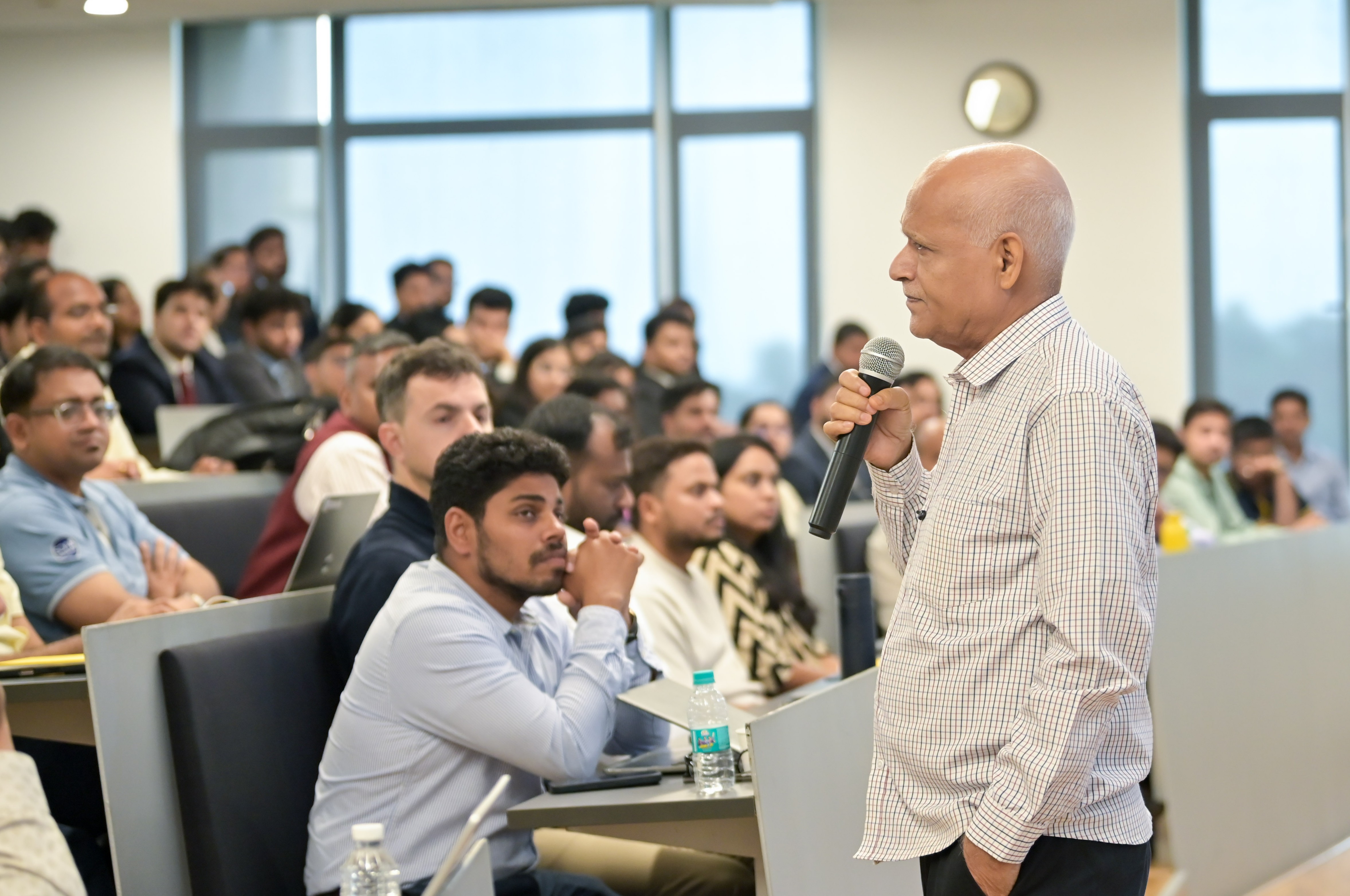
SDA Bocconi Asia Center’s Executive Connect – Orchestrating Winning Performances series delivered two powerful days of immersive learning on June 27th and July 11th, 2025. Curated to showcase real stories of transformation, resilience, and innovation, the event brought together some of India’s most dynamic leaders across diverse sectors — fintech, policing, CSR, HR, marketing, and health systems — to share what it truly means to win in complex ecosystems. The sessions went beyond surface-level inspiration, delving deeply into success through the lens of robust business frameworks, decision-making models, and people-centric leadership narratives. Each day was designed with a strong pedagogical structure: a keynote presentation by the guest speaker, followed by an interactive Q&A with the faculty, and concluded with reflections and open dialogue with students. The June 27th event, moderated by Prof. Shibani Belwalkar, Professor of Human Resource Management and Program Director of the International Executive Master in Business program, and Executive Coach and Mentor, Prof. Amitava Bose, spotlighted transformation through three distinct perspectives: financial inclusion, community policing, and startup innovation. Ketan Patel, CEO of Mswipe, offered a candid account of the challenges and triumphs of building one of India’s leading fintech enterprises. He drew on his entrepreneurial journey to emphasize how innovation, execution, and resilience are critical when challenging established industry giants. Former Director General of Police – Assam, Fulbright Scholar, and Sahitya Akademi awardee – IPS Kuladhar Saikia, shared the extraordinary journey of Project Prahari — a pioneering police-public partnership launched to combat deep-rooted social issues such as witch-hunting in Assam. His reflections revealed the power of empathy in governance and the role of inclusive leadership in rebuilding fractured communities. Elizabeth Venkataraman, Executive Director at Shriram Finance and recognized as the BFSI Woman Marketer of the Year, presented a compelling narrative on how Shriram Finance scaled its retail business across rural India. Her address highlighted how trust, brand storytelling, and community engagement became central to building long-term success. The second event, held on July 11th and moderated by Prof. Shibani Belwalkar and Prof. Ramakrishna Velamuri, Visiting Professor of the Rotman-Bocconi GEMBA program, shifted focus to people, purpose, and performance. Amar Sinhji, Executive Director of Human Resources at Khaitan & Co., reflected on the intricacies of managing elite legal talent in high-performance environments. Drawing from his rich experience in the Tata Group and Khaitan, he underscored the importance of aligning human resource practices with business culture and long-term organizational goals. Vishal Phanse, former CEO of Piramal Swasthya, then expanded the discussion to the realm of corporate social responsibility. He spoke about CSR not as an act of charity but as a mechanism for systemic change. Through examples from his work in healthcare and community partnerships, Phanse illustrated how large-scale programs can meaningfully impact millions of lives while strengthening the social fabric. Closing the day, Shanil Verma, HR Head at Multiples, explored the challenges of managing talent in high-pressure business environments. He highlighted the balance between agility, emotional intelligence, and strategic foresight required to cultivate resilience and ensure long-term organizational success. What emerged across both days was a powerful set of insights into the nature of leadership. Success was portrayed not only as a function of strategy and performance but also as a deeply human endeavor. Trust, empathy, and inclusivity surfaced repeatedly as essential elements, whether in scaling fintech solutions, driving grassroots social change, or nurturing high-performing teams. Through this initiative, Orchestrating Winning Performances has reaffirmed its place as a signature Executive Connect event at SDA Bocconi Asia Center. By blending academic rigor with real-world wisdom, and by facilitating dialogue between students and some of India’s most impactful leaders, the series continues to offer a rich mosaic of the country’s evolving leadership landscape.