HR1: Voices Empowering Workforce of the Future

With one conversation at a time, HR1 is a platform developed to empower voices for the future of the workplace. Human Resources maestros delivered talks focusing on enhancing diversity, driving effective change management, and cultivating a growth mindset while highlighting the importance of upskilling, navigating economic uncertainties, and integrating sustainability in India The Royal Opera House in Mumbai played host to HR1, an event focused on shaping the future of India’s workforce. Organised by SDA Bocconi Asia Center, the event brought together a distinguished lineup of speakers and experts to discuss key topics essential for the growth and development of India’s talent pool. The Asia Center has been a pan-Asia hub for SDA Bocconi School of Management, Italy, since 2012. The event, themed ‘Adapting to Change: Talent for India’, was inaugurated by Alessandro Giuliani, Managing Director of SDA Bocconi Asia Center. In his opening address, Giuliani highlighted the need for adaptability in today’s rapidly evolving business environment. “Businesses need to treat their employees with the same level of respect and care they extend to their most valued clients,” Giuliani asserted. As India continues to advance on the global stage, empowering the workforce with the right skills and mindset is vital for sustaining its pace of development. Giuliani informed that SDA Bocconi School of Management, Italy ranks first in Europe and its MBA ranks 3rd worldwide. “In addition to our academic programs, we have consistently engaged in numerous extracurricular activities. We emphasise not only technical skills but also soft skills, values, and diverse perspectives, embodying the renowned Italian style for which we are famous,” he pointed out. Ambassador designated of Italy to India, Antonio Bartoli highlighted the significance of the mobility agreement between India and Italy, which facilitates the exchange of skilled personnel. “The agreement between our two countries is a pioneering step. It allows for qualified Indian personnel to work in Italy beyond the usual quotas, providing invaluable opportunities for both our companies and talented young Indians seeking international experience,” Bartoli noted. The Consul General of Italy in Mumbai, Walter Ferrara also highlighted the importance of educational collaboration. “Having renowned institutions like SDA Bocconi in Mumbai is a privilege. It reflects the strengthening Indo-Italian relationship and provides a platform for Indian students to gain world-class education and exposure,” he remarked. EMBRACING FAILURE AND GROWTH Dr Ritu Anand, Former Chief Leadership & Diversity Officer and Senior Vice President HR of Tata Consultancy services spoke about her journey, emphasising the value of failure as a stepping stone to success. “Without failure, you will not know what doesn’t work. And what doesn’t work will tell me what will work,” she informed. She shared how her early struggles, including doubts about her career path after completing her PhD, led her to embrace risk, challenge assumptions, and develop a growth mindset. Dr Anand highlighted the importance of learning from failures, celebrating effort, and adapting to change. CULTIVATING TALENT Yogi Sriram, Ex Senior Vice President- Corporate Human Resources and Advisor to Chairman & MD for Group Human Resources at Larsen & Turbo talked about the importance of developing a well-rounded skill set to succeed in today’s world. “The ‘T’ in talent stands for thinking- specifically, thinking about thinking, or metacognition. Like mastering any skill, from playing the violin to excelling in sports, this is something you can develop. My message to you is to hone this ability. It’s crucial, as our memories are often flawed, and we rely on mental shortcuts that can lead to errors.” He said. Sriram also spoke on the value of maintaining a positive attitude, continuous learning, and emotional intelligence (EQ). He argued that individuals can navigate complex challenges, avoid cognitive biases, and contribute meaningfully to both their personal and professional lives. PLANNING FOR THE FUTURE Sunder Natarajan, Chief Human Resource Officer, IndiaFirst Life Insurance pointed out the significance of succession planning by drawing parallels between history, mythology, and modern business practices. He highlighted how the CFO role in insurance companies is evolving, predicting that future CFOs will require both actuarial and chartered accountancy qualifications. Reflecting on historical figures like King Dashrath and Sundara Chola, Natarajan illustrated how a well-planned succession strategy could alter outcomes. He urged leaders to think. ahead, create comprehensive business strategies, and ensure that digital and human capital plans align with their long-term vision. Natarajan highlighted the risk of organisational extinction without proper succession planning. HARNESSING THE FIVE ELEMENTS FOR PROGRESS Shalini Kamath, Founder and CEO, SK & Associates outlined how organisations can draw from nature’s five elements to create thriving workplaces. She emphasised the importance of starting with guided mastery, akin to the simple beginnings of water transforming into steam and ice, symbolising continuous renewal. Kamath stressed on the need for organisational processes to flow like water-smooth and adaptable. “Fire represents the passion and energy needed to inspire and motivate employees, while Earth signifies the foundational structure of an organisation, tailored to its unique purpose and capabilities. Finally, Air, though invisible,highlights the importance of culture and communication, integral to organisational vitality,” she said adding that embracing these elements can help build sustainable and fulfilling work environments. EMBRACING CUSTOMER-CENTRIC INNOVATION Mahesh Gera, Group Chief Human Resource Officer, Rustomjee talked about the transformative impact of adapting to consumer needs. He pointed out how ‘Zomato’s strategic tie-ups with PVR for in-cinema delivery’ answer changing customer expectations. Reflecting on technological improvements, he emphasised how ‘cellular technology and Al reshape customer experiences,’ resulting in continual feedback and adaptation. Gera uses examples such as Blinkit’s home printout service and Zomato’s sealed package following a public incident. His advice is: “Understanding and responding to customer needs can drive impactful HR policies and business practices.” These findings highlight the relevance of customer-centric methods in business success. ROLE OF UPSKILLING AND RESKILL- ING IN STAYING RELEVANT Gaurav Paruthi, Vice President, Talent & Academy (Human Resources), HDFC Ergo General Insurance spoke on the importance of upskilling and reskilling. “Upskilling involves enhancing current abilities with new skills, while reskilling entails transitioning to different roles, such as a
Hult Prize OnCampus 2023 – Redesigning fashion in a Sustainable way

The Hult Prize Foundation empowers young people to become leaders of change through social entrepreneurship. Tens of thousands of students from 100+ countries participate each year, representing 2,000+ institutions of higher education. The Hult Prize OnCampus Program brings the competition to universities globally, allowing student leaders to organize their own localized version with support from the foundation. The winning team at each university advances to the regional summits and the global accelerator, bringing them one step closer to making a positive impact on the world. Hult prize participants came together to make the world a better place at SDA Bocconi Asia Center on February 05, 2023. 60 teams participated with impressive ideas focusing on solving the most pressing issues plaguing the globe. The theme of this year was ‘Redesigning fashion in a Sustainable way’. The event began with the introduction of the Hult prize Competition and the 6 distinguished judges Mr. Santosh Phad, Dr. Anar Rupji, Mr. Vedant Ahluwalia, Mr. Mubin Sayyed, Mr. Kinner Lakhani, and Mr. Nasimul Haque, who made the event even more special with their presence. Followed the 1st round of the On-campus program in which 20 teams in each room, were evaluated by 2 judges each. The best team from each of the 3 rooms was chosen, which then competed in the final round to bag the title of “Winner”. After presenting their ideas in front of 6 prominent judges altogether, SDA Bocconi Asia Center got its Hult Prize 2023 On-Campus Program’s Winner as “Team Elements”. The team “Sustainable Fashion for KI & KA” was declared as the 1st Runner Up and the team “Rising Star” was the 2nd Runner Up. A session filled with loads of learning. Students presented some impeccable and creative ideas. It was exhilarating to see people put sustainability in the front seat and devise some amazing business plans, says Dr. Anar Rupji, Co-founder Mera Adhikar. Dr. Rupji is a social entrepreneur on a mission to educate every Indian citizen about their entitlement to government Welfare schemes. The ideas revolved around fashion from peels of fruits, sustainable shoes, and an extension to finding sustainable products without any hassle. A total of 6 judges came up with a unanimous decision and declared team elements as the winner of Hult Prize OnCampus 2023 The team that was triumphant on the Day was “Team Element” “For you to sustain a world that remains, let’s shoestain” The concept of Shoestain is to make people aware and educate about the impact of the materials used in the shoes they purchase online on the environment via various metrics through a simple browser based web extension The winning team believed in the influence digital media can bring along with it. And while ideating, awareness came up as a key factor that could influence purchasing behavior and incorporate social responsibilities within the consumers. That’s how Shoestain came into being, a common junction where digitalization is used to raise awareness about sustainability in consumers in the simplest possible manner. The students were guided and supported throughout the competition by our Managing Director, Alessandro Giuliani, and SDA Bocconi’s Professor of Entrepreneurship, Innovation, and Strategy, Mikkel Draebye, who played a crucial role in their success. The Campus Director, along with the Hult Prize Taskforce consisting of 13 people, made Hult Prize OnCampus 2023 a success.
Cartier is a textbook example of how a luxury brand can cover all the bases

SDA Bocconi Asia Center was honoured to host the Cartier team for a round of exciting and interactive campus engagement for the full-time International Master in Business Program. Founded in 1847, Cartier possesses a unique savoir-faire when it comes to high jewellery and is truly a reference point when it comes to timeless luxury. Cartier’s association with India spans over 110 years. Over time, the brand has managed to stay meaningful and relevant in the region and continue to strive to maintain that. Jaya Venugopal (University Engagement Director), Jennifer Andamaye (HR Director MEIAT), Lauren Collins (Senior Talent Acquisition Partner) & Aastha Dubey (HR Manager India) answered questions that students had about the brand, its presence in the country, the strategy they employ to penetrate new markets and more. While remaining a constant source of inspiration for the whole industry, Cartier is also a textbook example of how a luxury brand can cover all the bases, from craftsmanship and product development to customer experience and digital strategy. From a cultural business perspective, the founders have successfully inculcated the values of rigour, generosity and curiosity into all the employees of Cartier. This is an invaluable partnership for SDA Bocconi Asia Center. We thank the team for taking out the time to give students a close glimpse into the world of Cartier and we look forward to many more such interactions in the future!
Convocation of International Executive Master in Business

In the presence of Stefano Caselli, Dean SDA Bocconi, David Bardolet Dean SDA Bocconi Asia Center, we celebrated the convocation ceremony of IEMB – International Master In Business Class of 2021 and 2022 with Prof Veronica Vecchi, Director Executive Education. Special Thanks to our guest T. Ajungla Jamir, Consul General – Consulate General of India Simona Battiloro, Ministero degli Affari Esteri e della Cooperazione Internazionale followed by addresses from IEMB class representatives Rohit Bhagat and Prasad Phatak from IEMB Batch 2021 and 2022 respectively. Prof Vecchi addressed the graduating batch by sharing the importance of continuous learning for executives to develop leadership skills and navigate the challenges of the domestic and international business environment. A huge applause to the continuous effort and ambition of the participants. The convocation for the International Executive Master in Business was hosted in Milan campus of SDA Bocconi School of management. “The IEMB course not only imparted excellent knowledge on business and management topics but also provided a number of opportunities to work in team-based settings, particularly for group assignments. These executive MBA experiences provided exciting insights into how diverse personalities within a team could be effectively handled to achieve a common objective. With the case-based pedagogy and in-class discussions on real-life business problems, I developed skills to dig deeper for crucial information and arrive at the most suitable solution. In addition, the rigor of this program helped me improve my time management skills by finding the right balance between my professional and educational commitments. Applying all the learnings at my workplace, I could successfully convince my managers about my preparedness for the higher role, eventually leading to my promotion.” Narrates Pranav Bhagwat, Vice President at Credit Suisse Services AG. All the best IEMB 2021 & 2022!
The Executive Master Journey of a Mother and Business Leader
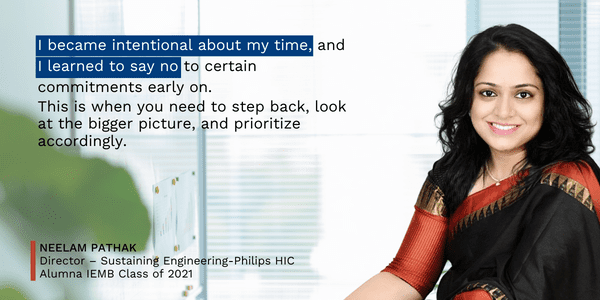
The Journey of a Mother and Business Leader Senior Professionals look for different strategies, motivations, and frameworks to balance work, education, and family. Many of them are parents who have to figure out what works best for them and their families while ensuring they stay focussed on their Executive MBA pursuits. One of the reasons why senior executives join SDA Bocconi’s International Executive Master In Business (IEMB) program in Mumbai is to get access to Europe’s top-ranked business school right here in India. SDA Bocconi School of Management is amongst a few prestigious b-schools that has triple crown accreditation and ranks 7th Worldwide for combined executive education and 3rd worldwide for custom executive education by FT Rankings 2022. Anchoring on the International brand value of SDA Bocconi becomes a key reason for choosing the IEMB Program delivered at the Asia Center, Mumbai Neelam Pandey Pathak SDA Bocconi, IEMB, Class of 2021. Director – Sustaining Engineering-Philips HIC. SWE Global Ambassador, PMI ACAC Member, VP NRV Bihar, PMP®, VMA I graduated in Mechanical Engineering in 2001 from the University of Pune and started my career with the auto behemoth Tata Motors. Over the years, however, the onus was back on me to equip myself further in order to not just excel in what I was doing but also unlock new opportunities by gaining more knowledge and qualifications outside of what the typical ‘on-the-job’ experience provided. In 2011, it led me to enrol in one of the top Indian management institutes to pursue a one-year on-campus program for executives. As usual, given the era we live in, there was this urge to further up-skill again after 4 to 5 years to counter complacency and career stagnancy. Around that time, the industry was also witnessing major transitions. Digital transformation, analytics, and globalisation were new themes that were gaining massive traction. So, the realisation set in that I needed an international executive MBA that would help me take on leadership roles in a global context. That’s when I decided to opt for SDA Bocconi’s International executive Master in Business. I realised that if I needed to transform from a managerial position to a leadership positio, and when I say leadership position, I mean taking up the entire responsibility of a business line, I had to evolve professionally and develop a global outlook. When you are working with MNCs, you need to have this global perspective about the interlinkages of economic paradigms. Pursuing my executive Master from SDA Bocconi not only allowed me to up-skill with contemporary skills but also helped me cultivate a global perspective of business realities. And it surely helped me with my next career move, as I joined an international organisation headquartered outside of India. Having that global exposure and perspective paved the way for me to undertake leadership responsibilities that required me to know how businesses operated across different regions. How did you manage the stress when juggling work, family, and education? I have two children; one was eleven years old and the other was two and a half years old when I enrolled in SDA Bocconi’s executive masters in Mumbai. From the get-go, I knew it wouldn’t be an easy journey, but I had the clarity and willingness to pursue the program. I had to communicate to my husband that the IEMB program required me to travel from Pune to Bombay every weekend, stay there for two days to attend my classes, and then return to resume my full-time job. Explaining to my husband that this would be my life for the next two years paved a path around a discussion about how we would navigate the myriad parenting challenges that came with the decision. It was important to talk to my eleven-year-old and explain how my availability would change for the next two years. But once I had the confidence of my family, I knew we would manage. There are a few things that I wanted to highlight here. >> First of all, when you are thinking about enrolling in a program like IEMB, you should build a matrix of pros and cons. You won’t believe it, but I plotted mine in excel. There needs to be clarity about how the program will help you, how your life will be affected, how your decision will affect your family, how you will prevent burnout, and how you will sustain your efforts for the next two years. And I must emphasis that you need to plan till the end to prevent burnout. In my case, I even did a demo of what it would be like for my kids to be away from me. >> Secondly, I would say having a discussion with your family and managers is essential to convey how exactly things would change after you enroll in the program. This ensures you have a support system to rely upon during the entire two-year journey. It also takes away the emotional and mental strain of second-guessing how they would cope with your regular unavailability. On the professional end, it is important that you communicate with your bosses that you are going to need flexibility in terms of office timings. You have to take them into confidence that your work will not be impacted. I became intentional about my time, and I learned to say no to certain commitments early on. This is when you need to step back, look at the bigger picture, and prioritize accordingly. You have often mentioned your perspective on the scarcity of women in top management and especially in core engineering/manufacturing companies. Can you share what solutions as a leader you have implemented to improve the situation in your capacity? If you look at the numbers, women are underrepresented at managerial and leadership levels. So, it is very important that women are given equal opportunities and avenues that increase their representation at the top levels. How I have approached this problem is through a two-front
Will the downsizing in edtech be followed by a reduction in media spends?

Does the string of layoffs portend a downsizing of marketing spends? As liquidity is tightening and investors are looking at business models more rationally, the bottom line will start to matter more and more. This phase will mean consolidation in the edtech space and an increased pace of mergers and acquisitions. Existing players will become more cautious with their spending and growth plans. This has resulted in promoters looking to reduce costs, and some of the recent layoffs are a consequence of this. This could also have edtech reducing media spend in the short term. Less capital going into edtech will necessarily lead to some reductions in all kinds of spending across the industry in the short term. But after that, once the dust settles, the winning companies will be in a position to scale up big and fast, and capital will flow again. I think the current cycle in edtech is mostly about digital as a delivery model. But digital as a source of new and better knowledge is still largely undeveloped and could be the next big opportunity for investment. This is why I believe that, in a hybrid educational model, global schools have a lot to say, as their model is not just the delivery of learning but also the generation of knowledge. It is a similar situation to the one we witnessed in the video-on-demand market. As much as Netflix and others have changed the way we consume content, the companies that excel in content creation”—think Disney, for instance”—are still there and very well positioned,” says Professor David Bardolet, Dean and Professor of Strategy, SDA Bocconi Asia Center, Mumbai. Originally published on : https://www.medianews4u.com/has-the-edtech-bubble-burst/
TedxBocconiUMumbai 2022: Mavericks & Misfits
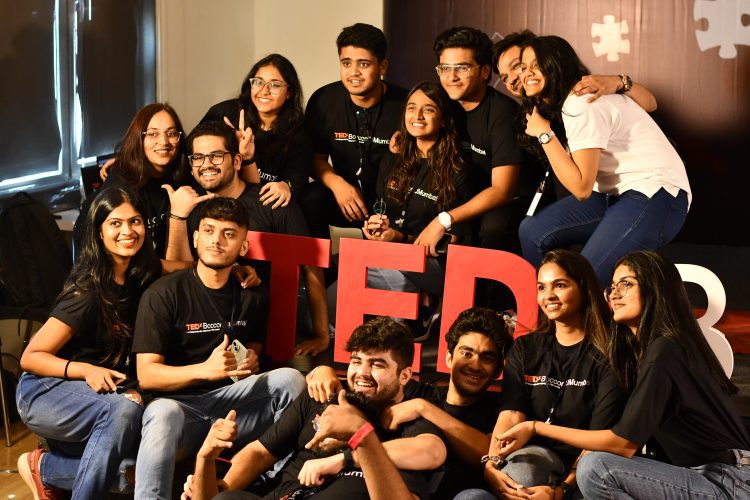
25th of June 2022 marked the day of TEDxBocconiUMumbai at SDA Bocconi Asia Center. Like every year, this year was no different in providing an opportunity to make an impact and inspire communities. With the theme “Mavericks & Misfits”, we celebrated the spirit of individualism and aimed to put the spotlight on those that have fearlessly faced the world in an effort to be their most authentic self. Our goal was to bring together bright minds to give talks and performances that were idea-focused, and on a wide range of subjects, to foster learning and inspiration. Keeping this in mind, we invited eminent speakers & performers from diverse backgrounds, sparking conversations that exposed the audience to a new perspective on life. For instance, Celebrity Chef, Amrita Raichand encouraged the audience to break stereotypes and follow the unconventional path. Tv Personality & Host, Dr. Shamoly Khera shed light on being a misfit and focusing on achieving multi-potentiality. Renowned Interior Designer, Sarah Sham, Essajees Atelier focused on the power of openness and giving back to the community by sharing. In addition, environmentalist and hydroponic farmer, Krutarth Upadhyay exposed the audience to the art of hydroponics and its positive impact on climate change. Internationally renowned for sartorial expertise, India’s foremost fashion and costume designer Nidhi Yasha glorified the idea of being a free-spirited maverick who believes in the power of creativity. CEO of Copter 7, Mohit Bhagchandani explained how building a brand and legacy by combining it with the sports industry can help a company stand out. Performers on the other hand mesmerised the audience with their suave. Apeksha Bhattacharyya walked in as a Ballerina, enriching the rich culture of the Russian Ballet. One-woman band, Vasuda Sharma captivated viewers with her live looping. Finally, Aanchal Shrivastava swayed the audience with her soothing voice. TEDxBocconiUMumbai continues to build the legacy and inspire communities on a plethora of topics to teach and inspire, whilst provoking conversations that matter.
How to ace your B-School interview

Joining the right B-school can go a long way in defining how your career pans out. After months of preparation for CAT and other entrance exams, the only thing standing between you and your dream B-school is the personal interview. The thought of a personal interview can make a lot of people turn into nervous wrecks and could potentially hinder their admission to a college. The question is, how do you prepare for this interview? Here are a few things you should know before going for a B-School interview. 1. Prepare for the Classic questions It doesn’t matter which B-School interview it is, it is almost guaranteed that you would be asked a few classic questions. A few examples of the classics are: – Tell me about yourself. – Why do you want to do an MBA? – Why are you interested in this school or program? – What are some of your strengths and weaknesses? These questions can give you a golden opportunity to make a very strong first impression. It is crucial for you to script out the answer for these questions and have pointers ready because if you struggle with answering these questions then the interviewer gets an impression that you are unprepared/disinterested. For my interview at SDA Bocconi Asia Center, I made sure to go through the online website and brochure. This helped me better understand what the college has to offer. When I was asked about my reasons for choosing IMB program at SDA Bocconi, I was able to provide a well-structured and informed answer. Another reason to script these answers is to help you drive your interview by mentioning USPs /characteristics that the interviewer might find interesting and pick up on to ask further questions. Also, prepare for situational questions by keeping a few instances in mind where you would have acted as a leader or that highlight some of the positive qualities you possess. 2. Speak beyond your CV The interviewer is aware of the things you have mentioned on your CV and of your academic accolades. A simple mention of the same is enough unless you are asked further questions for the same. Focus on things in your profile that you could not mention on your CV. Some colleges pay a lot of attention to your holistic profile and would like to no more than that is there on the CV. During my interview at SDA Bocconi Asia Center, the very first question I was asked was to introduce myself without mentioning the points on my CV. If I would not have prepared for it I would have struggled to answer the same and that would have given a very bad impression to the interviewer. When it comes to talking beyond your CV, it could be anything like a hobby of yours that you are really good at, or just simply something you have done that you are proud of and it adds to your holistic profile. Try to be creative with it, make it something that would make the interviewer get a better understanding of your personality. You can use this method when you are asked to give an introduction about yourself. This is the perfect way to make the Interviewer see everything that you can offer being part of the institution. 3. Do not Bluff This is a very common practice among candidates during an interview. You end up bluffing or exaggerating some skills and experiences to get out of a tricky question. This is the worst mistake you can make as the interviewers will always ask follow-up questions to get a more in-depth idea and at this point, you will not be able to give a concrete answer. An interviewer does not expect you to know everything under the sun. In case you are unaware of something, be honest about it. This is better than being caught in a lie because that would almost guarantee you not securing your admission. 4. Introspect Before you sit for an interview make sure to analyse your profile in depth. Try to figure out what makes you a unique candidate. Always list down your areas of strength to keep them as touch points during the course of the interview. You want the interviewer to remember the best parts of your profile and for that, you need to be consciously aware of them. At the same time find the weak points in your profile that the interviewer could pick up on and prepare to be answerable for the same. You do not need to justify something, but you need to end your answer with the course of action you took to combat that weakness. This is very important even while answering the question about strengths and weaknesses as you should never leave by stating a weakness without mentioning how you have been working on improving on it. 5. Research about the B-School and the Program A very important thing before you sit for an interview is to research the institution and the program you are applying for. You need to be confident when asked about the program and your interest in the program. If you are unsure about the prospects of the school and the program that you have applied for, it gives the interviewer the impression that you are not interested in the same. At the same time, it doesn’t mean you need to know everything and this is the perfect thing to ask questions on at the end of the interview. Ask relevant questions about the institute and what it has to offer. This makes the interviewer feel like you are genuinely interested in the institution and would be a good fit for the program. E.g. After the end of my interview, I had asked my interviewer whether there is an arrangement for any Italian classes on campus as the college offers a specialisation semester at SDA Bocconi School of management, Milan. By this, I was able to establish that I
IMB – Digital Marketing and Web analytics
The pandemic has accelerated the changes in the dynamics of marketing as a profession. It has caught many people off-guard as the market was not entirely prepared for this change. Digital Marketers suddenly became the need of the hour as people realised the importance of having a social media presence for their businesses. This especially affected small and medium-size businesses as the only way to reach wider audiences were to spread brand awareness through all the different channels of social media. This led to sudden flooding of business pages with content and information for all eyes to see but still, only some were successfully able to establish themselves as a brand. To understand the reason for the success of these select pages, we need to first understand the real meaning of Digital Marketing. The purview of digital marketing goes way beyond just creating content and graphics. It encompasses various factors such as understanding how to use analytical tools, studying the market trends, understanding algorithms of various pages, and the list goes on. The common practice to understand these dynamics is to do an online course but that pathway has its limitations in terms of scope and applicability. On the other hand, these skills are far too new and have not been embedded in the education system yet. So where does an aspiring marketer learn these skills? This is where the International Master in Business (IMB) course at SDA Bocconi Asia Center becomes a ray of sunshine in the dark as it helps you get an edge over your peers by redefining the boundaries of education and continuously updating the courses to integrate them with the current requirements of the market. Professor Andreina Mandelli has over 25 years of experience in teaching strategies of marketing and has been a pioneer in promoting the importance of integrating ‘Digital Marketing and Web Analytics as a course in the IMB program. Throughout her course, she helps you gain more insight about various tools you can use to increase your brand reach and engagement on digital platforms and how to use available analytical tools to your benefit. It helps you gauge the skill sets and the theoretical backing, which is extremely important for any aspiring marketer, especially freshers. At the same time, you have numerous opportunities to take up Live Projects offering dedicated roles as digital marketers which help you get hands-on experience while learning about this new wave. This combination of classroom learning along with hands-on experience in my opinion helps every aspirant to get a holistic view of how the future in marketing looks and gives a boost in regards to being interview-ready for a role in this domain. Author Rohan Mehrotra | Editor – Rohan Mehrotra and Vedika Nathani
Sustainability Lab Launched by Italian ambassador to India, Mr. Vincenzo de Luca
SDA Bocconi Asia Center is proud to launch “Sustainability Lab” in India which was inaugurated in the presence of the Italian ambassador to India, Mr. Vincenzo de Luca. The event was opened by Alessandro Giuliani, MD SDA Bocconi Asia Center. Our first venture of sustainability started in Italy by Prof. Francesca Romana Rinaldi who presented the research paper on “Monitor for circular fashion” powered by Enel X and now we are proud to expand this initiative in India at the Asia Center. Following up with a panel on Best practices from India, Prof Paola Bielli, M&T department moderated an incredible conversation on “When circularity drives collaboration and Relevance of sustainability for the future of business, with Vaishali Shadangule, founder and CEO at VAISHALI S Couture . Marco Guazzoni, Sustainability Head at Vibram Group The event was also graced with the presence of Italian Consul General Alessandro De Masi and many from the IICCI – The Indo-Italian Chamber of Commerce and Industry The campus event to launch our initiative proved to be an educative platform that was successful in increasing the knowledge of our students about sustainability and how they can contribute to the same. SDA Bocconi Asia Center is ecstatic to see its contribution to the noble community be a part of it. #sustainability #sustainabilitylab #sdabocconi #sdabocconiasiacenter #mumbai #bschool As cohost of the @COP26 , Italy organised a huge meeting wh youth @youth4climate They’ve been straightforward: “Stop to say bla bla and take action” We were happy to receive this message in Milan and we are happy to forward it to Glasgow”@sdabocconi@Videluca59 pic.twitter.com/PjuaX4sLtW Italy in Mumbai (@ItalyinMumbai) October 25, 2021 Click here to watch the recap video of 🇮🇹 Ambassador De Luca’s visit to Mumbai. 👍https://t.co/51IVm4P1U7@ItalyinIndia@UniItalia_India @IndiaItaly@SDABocconiAC@CMOMaharashtra@AUThackeray@AsiaticSocMum@marangoni@sajjanjindal@anandmahindra@RNTata2000@Videluca59 Italy in Mumbai (@ItalyinMumbai) October 31, 2021