Applied Marketing Finance: Corporate series by Professor Anjana Grewal
Pete Drucker rightly said- “If it can be measured, it cannot be managed” During the AMF class, Prof Grewal had invited Mr. Ganish Bahl, Director-Digital Marketing at Vivo who has strong Digital Marketing experience to share his experiences with the candidates of International Masters in Business (IMB) at SDA Bocconi Asia Center on the topic, Social Media KPIs Mr. Ganish is a seasoned marketer with over 14 years of experience in the telecom industry. He is an engineer and MBA from IIM L and is an ambassador of digital growth and transformation in the Industry. Due to his consistent efforts, he has been awarded as the Top 30 Digital marketers by Economic Times Brand Equity in 2019 and he has also featured among the top 50 digital marketers by CMO Council for 3 consecutive years. He has been a great team man and leader who has been responsible for transforming the digital journey of top global brands like Samsung, Vivo, Micromax, etc. He is an avid traveler and loves adventure sports to keep up the liveliness. His motto in life is “Never say Never”. The session started with throwing some light on understanding the current digital landscape (Globally & Indian context), benefits when a digital medium is used, and went on to explore how objectives and strategy dictate KPI, a step-by-step approach on how to choose them strategically, and a framework to create “Thumb Stopping” content so as to keep potential customers engaged throughout their journey. The key learning in the session was how qualitative metrics customized as per objectives, which can be benchmarked and upgraded to help analyze social trends and deliver on promised value. Prof Dr. Grewal also added some memorable insights from Mr. Ganish Bahl’ session 1. Digital is a very cost-efficient medium 2. The usage of Facebook Vernacular has grown dramatically in India 3. Pre-COVID- Consumer behavior could be summed in ROPO- Research Online and Purchase offline which would have now shifted due to the Covid-19 Lockdown 4. The objective is what defines the KPI. 5. There is an app for almost everything. Further discussions & examples on how cross-functional teams from marketing and finance make decisions together to achieve common goals especially for the digital mediums helped the students put practical structure to knowledge acquired from the classroom session. Dr. Anjana Grewal also invited Mr. Rahul Dash, Co-founder of Purplle.com for the AMF corporate series session. Rahul Dash is the Co-founder of Purplle.com, One of India’s leading Health and Beauty Destination. Purplle.com attracts 5 million visitors on a monthly basis with 70% repeat customers. In addition to an eCommerce Marketplace, Purplle also owns a bouquet of digital-first Beauty and skincare brands created for the Indian audience. Rahul graduated from IIT Kharagpur and IIM Ahmedabad and joined TAS (Tata Administrative Services) before starting Purplle.com Mr. Rahul Dash not only gave an overview of the company, which is a leading Indian Beauty Technology Company but also gave interesting insights into the e-commerce industry and its profitability drivers. Prof Grewal added that “E-Commerce has evolved over the last decade in India. In the current COVID phase it is making rapid strides. Consumer Behavior across age groups is shifting and this change is likely to be long term”. From a pure marketplace to an inventory-led model, Mr. Dash explained the different models that exist in e-commerce. Through the session, students also got a chance to understand the numerical element of profitability with a live case example covering all Profit and Loss elements specific to an e-commerce business. He touched upon the importance of Scale, Customer Acquisition Cost, and also repeat of Cohort in the analysis. The students of SDA Bocconi Asia Center thank both the guests for such enlightening sessions. The article is contributed by Vani Tarika & Ashish Panigrahi, IMB Class 2021.
An Energetic Start to the International Master in Business Batch 2020-22

– By Ayushi Dixit & Padmavathy Srinivasan In a first, SDA Bocconi Asia Center commenced the third batch of its flagship International Master in Business (IMB) 2020-22 programme virtually on July 13, 2020. Kicking off the induction session digitally, Managing Director Alessandro Giuliani, Dean David Bardolet, along with other renowned faculty, welcomed and addressed the gathering of the talented batch of new students. The academics team briefed the class with rules and regulations to be adhered to by the students to maintain camaraderie and decorum in college. With the same enthusiasm, the students attended their first pre-course in Accounting with Professor Laura Zoni. “Accountancy was one of the most feared subjects for students ranging from diverse academic backgrounds, but as Professor Laura Zoni virtually walked in with her warm smile, the class instantaneously lit up. Within a short period, most of us had answers to different questions from accounts to audit and were ready to deep dive into the subject, said Shreya Thukral, student of IMB 2020-22. With classes held online, there was an added importance given to team-building exercises for students which were conducted by Ms. Shilpa Khushalani from The Enlightenment Studio. To introduce the students into the enriching and rewarding field of management, the Career Development Services (CDS) team had invited eminent guest speakers from leading companies such as KPMG, Dell Technologies, Fortis Healthcare, ABinBev, Hindustan Coca-Cola Beverages Pvt Ltd, and Ernst & Young LLP. The speakers ranged from cross-functional domains including HR, Marketing, Finance, Sales, Operations, and Data Analytics. The industry leaders imparted their knowledge in an interactive session with the students. Some of the notable speakers included Mr. Unmesh Pawar, Partner- CHRO KPMG, who shared his insights on human capital strategy, organizational transformation, and workforce coaching. This was followed by Ms. Lulu Raghavan, the Managing Director of Landor Associates who elaborated her expertise on brand and corporate strategy. Another commendable session was organized by Mr. Ramesh Babu M, National Head- Projects at Hindustan Coca-Cola Beverages Pvt Ltd, where he conducted various activities such as interactive quiz and feedback session. Meanwhile, the senior students also introduced their fellow juniors to various academic clubs and committees operating in the college. The juniors were briefed about the objectives, selection processes, and KRAs of these clubs and committees. Thereafter, new core committee members were chosen from the junior batch to spearhead the activities of the respective clubs. Elaborating upon his experience of the selection process, Armaan Choudhary of IMB 2020-22, told, “The selection process of various clubs and committees were very rigorous. It helped me gauge the competition that lies ahead of me in the coming two years.” Given the importance of data analytics and the emergence of technology in management field, the new batch of IMB 2020-22 was given KPMG data analytics training under the guidance of Mr. Amit Choudhary, Manager-Analytics KPMG. Under the KPMG module, students were taught programming languages such as R, Python and SQL. Additionally, in order to inculcate basic management hygiene among the students, the CDS conducted multiple workshops to hone business skills such as advanced Excel, presentation techniques, and CV building. Another session by Mr. Manu Shankaran Potti, Sales Manager at LinkedIn, helped students optimize their LinkedIn profiles for networking with corporates. The rigorous yet thought-provoking workshops, guest lectures, and interactive activities provided a 360-degree view to the students on their journey for the next two years and beyond.
Top 5 Questions that are asked during a B-school Personal Interview
CAT results were declared a little while ago and MBA aspirants have started getting calls from various colleges for the second round of the selection process. Most business schools rely on a combination of the three basic formats for the final selection. Those three are: Written Ability Test (WAT) Group Discussion (GD) Personal Interview (PI) While WAT is popular with the IIMs, the most common of the above lot is Personal Interview. These typically last around half an hour and the interview panel judges the candidate on a host of factors such as communication skills, clarity of thought, ethical standards, etc. In this post, we will primarily talk about some of the common questions that are asked during the process. Q1 Introductory Question The introductory question in almost all personal interviews would be some version of Tell us about yourself. While this might look harmless, but a candidate should be well prepared for the introduction. The answer to this question sets the tone for the entire interview. A good answer in this category would focus only on the positives. Even if there are some glaring problems in your curriculum vitae, you should try to avoid them during this answer unless you are explicitly asked to elaborate on that. A common mistake that people tend to make during this question, they bring out their shortcomings (like a year gap after 12th, less marks in graduation, etc.) and try to justify them some way or the other. Often, they end up blaming someone else or circumstances for it, this should not be done. It would be better if you enter the interview room well prepared with 2-3 versions of the introductory answer. Also, try to include something about yourself in the introductory answer that cannot be reflected in the curriculum vitae. Please understand that the panel already has a copy of your resume. Q2 Academic / Work-ex Related Question While both academic and work-related questions come directly from the points in your intro, they have a marked difference. Academic questions tend to be oriented towards the basics, while work-related questions will usually go deeper. This is primarily because a working candidate is very immediately involved in his/her job, and a greater depth of knowledge and maturity of outlook is expected of a working candidate. Working candidates will face a number of questions on the details of their work, such as, the daily responsibilities, the reporting head, the clients handled, the nature of the team in which you work, the platforms and the technologies applied in the course of job, growth opportunities within the company, technical details such as the management of the company, the market size, the stock price etc. Q3 General Knowledge Related Questions A common goal of the interview process is to check if the candidate is a well-rounded individual or not. One of the ways to do the same is testing a candidate on General Knowledge related issues. While there are a bunch of exams that test a candidate on GK, the most popular one ‘CAT’ does not. Also, XAT does not share the GK score with other colleges. In such cases, you can expect some questions on current affair topics. Now these questions would not be of the type ‘Who became the Chief Justice of India in Nov 2019?’ but it would be more of the type ‘What do you think would be the impact of the Ayodhya verdict in the long run?’ The answer for the first one is Sharad Bobde and the answer for the second one would probably take another blogpost. So, you need to have a slightly deeper understanding of topics to crack this type of questions. Some of the possible topics for this year’s GK questions could be: Coronavirus Pandemic US Presidential Elections Economic slowdown in India Persian Gulf Crisis Australian Bushfires Impact of Brexit on European and Global Economy US-China Trade War CAA-NRC-NPR Impeachment of Donald Trump Honk-Kong Protests We have a GK course with videos to help you prepare for the same. You can check out our GK course here. Q4 Personality Based Questions These questions primarily comprise the following: extra-curricular activities, hobbies and interests, strengths and weaknesses, personal values and ethics, memorable life experience and challenges. Many B-schools restrict the references to extra-curricular activities by clearly stipulating a minimum level of participation (such as district or state level). If no such stipulation exists, feel free to mention any activity that you have pursued alongside your studies. Extra-curricular activities, unlike hobbies and interest, are not necessarily current pursuits. You may have been a part of the school debate team 5 years ago. That still qualifies as your extra-curricular activity. When you refer to the activities, no matter how small they seem, always focus on your learnings from them. The panel may also ask you to talk about memorable life experiences that have had a seminal influence on your being. Irrespective of whether these experiences are joyful or painful, do not look at them from an emotional perspective. Do not gloat over your victories or lament your losses. Instead, look at both as sources of learning. Learning is all that remains after time has passed. You need to understand that CAT, GMAT, GRE, Bocconi Tests etc. are essentially eliminators. They are used to reject candidates who do not meet the basic criteria. On the other hand, the personal interview process is to select the candidates and if the candidate excels in the interview round there is possibility for securing scholarships. Q5 Goal Oriented Questions You should expect one of the following questions in your interview: What are your short-term career goals? What are your long-term career goals? Why do you want to do an MBA? Why do you want to do an MBA from this specific B-school Why should you be selected over other candidates? Please ensure that your short (5-6 years) and long (10-15 years) term goals cannot be at odds with each other. If you are passionate about social
Marketing Club Insights: Keeping up with the Changing Consumer Behavior

At SDA Bocconi Asia Center students have the opportunity to take part in domain specific professional clubs to ensure that their professional development begins, right from the initial months of the course. These clubs include; the Marketing club- Mercato Maniacs, the Consulting club- Consulenza, the Operations club-GenOps, the Finance club, the HR club, the Luxury club, and the Business and Technology club. The Marketing Club of SDA Bocconi Asia Center brings together the brightest minds who aspire to become the marketers that the world needs today. It involves coming together in synergy to explore, exchange and most significantly, learn the ever changing dynamics of the marketing world. The various skills are put to practice by actively taking part in club activities and learning sessions Vision: To enrich and enlighten students with the dynamics of marketing and be resourceful in sharing and spreading knowledge. This blog focuses on consumer behavior and has been outlined by the president of the marketing club to help students gain insights on the relevant marketing trends in the industry. A decade ago, consumers took pride in everything they owned. From houses to watches, the consumers of the 80s and before were very selective in their purchases. They wanted to gain long term results from any purchase they invested in. These consumers were more prone to saving and preferred to buy and own commodities that assured a longer usage time. Let’s head back and have a look at a common household in the 1980s, where owning vehicles was a luxury savored only by the rich and the affluent of the society. A commoner’s major goals in life comprised of owning a house that had just enough room for the family with minimalistic costs involved. Working women were not very common and women generally adopted work that suited their household responsibility of cooking and care. Fast forward two decades, we now witness revolutionary changes in consumer behaviour. India being the youngest country in the world proudly boasts of its energetic and enthusiastic youth. The internet revolution has brought upon some significant changes in shopping behaviour and consumerism of young India. The luxury of decades gone is today’s necessity. Here are a few of my observations as a marketeer pertaining to these shift in trends: Renting vs Owning The millennials of today are drifting from ownership to partnership. Due to a rise in the global workforce, youngsters today lead nomadic lives which was considered rather uncomfortable by the working professionals of the past decade. From renting homes to vehicles and even furniture, youngsters today do not seem to splurge their hard earnings into long lasting goods that demand a hefty sum. Business ventures that leverage this mindset of the millennials are on a rise. “Carpe diem” a popular phrase amongst the millennials that reiterates living in the moment. Most Youngsters today are commitment phobic and are less willing to make purchasing decisions that involve the long term future. It is vital therefore, that we market products that are ephemeral and cost effective. As marketeers of the future we must cleverly predict sectors that might tend towards the sharing economy and prepare consistent brand messages that should be communicated to consumers well in advance. Information Overload As marketeers it’s is inevitable that we have to tap the attention of each one of our distracted customers. Information has become so ubiquitous that customers have become immune to it. Thus it has become more challenging than ever to buy our consumer’s attention. From emails, to social media advertising to search engine ads, customers have become prey to a plethora of information they never really asked for. Thus today’s consumers are willing to pay a cent to avoid advertisements. It’s a parody that applications now motivate their customers to pay for a premium to avoid the very advertisements that keep their revenue running. Information oriented decision making Our customer from the previous decade would probably ask a friendly neighbor next door or a veteran in a particular field before he buys a commodity. Thanks to the internet, today’s customer doesn’t have the plight of keeping up with cranky old neighbors for advice, he simply Googles. Omni channel and multi-channel business models look forward to integrate the online and offline shopping experiences for the customer such that the effort from the customer’s side is minimised. Marketers should excel in customer relationship management to ensure that the customer is always heard and his shopping experience is seamless. From generalization to customization The rise in income has led to a steady rise in consumerism such that consumers today can afford personalization. This trend is particularly rampant in the fashion and beauty sector. Millennials now prefer products that are especially made for them and can cater to their needs in person. The decade saw the bloom of small scale enterprises in clothing, health and cosmetic sector that provide personalised products to its customers. As marketers, catering to specific needs of individuals in an extremely populated country like ours is a herculean task, however it is still feasible in sectors that are concentrated on a specific customer target with an efficient CRM. Time is more than Money Today’s consumer is willing to pay a penny extra for every extra minute he can save. With globalization, Indian workforce is introduced and made available to the western conglomerates. This makes the average working time of an Indian longer than his foreign counterpart, Thus no wonder time is quite valuable to today’s consumer and customers prefer taking routes that decrease their commute time to workspaces. This trend eventually lead to a rise in co-working spaces and the trend of working from homes, such that commute time can be spent on things that are more vital. As marketers one big challenge we face is to ask the customer for his valuable time, and so we must ensure that we engage the customer intelligently and implicitly without him realising his time being spent. Holistic wellness and sustainability The customer of the
“Students for a while, Alumni forever”
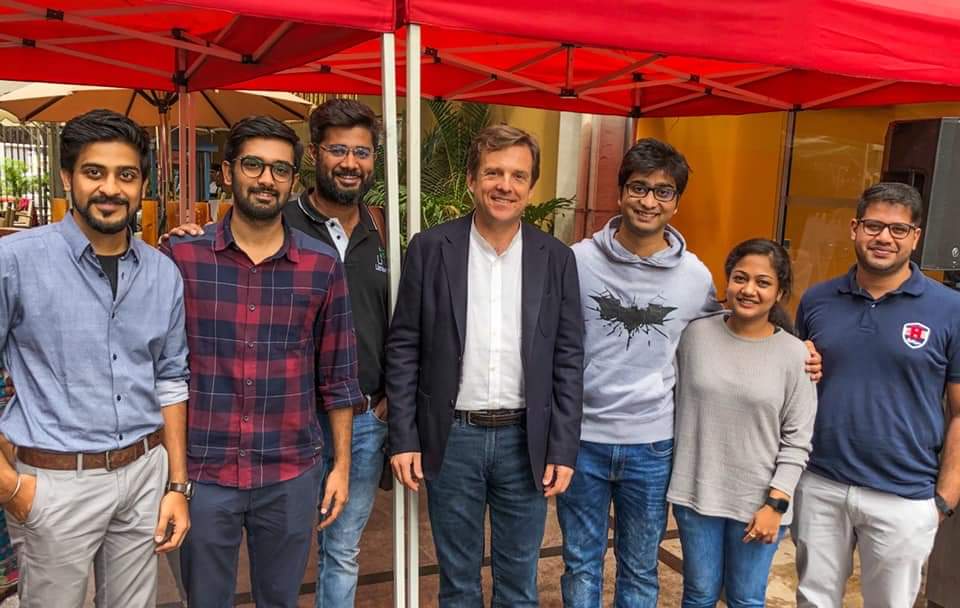
Since its inception in 2012, SDA Bocconi Asia Center is all set to mark its 8th year celebration in December 2019. Reflecting back in time, what was then deemed as a bold move of Bocconi University and its then MD Bruno Pavesi & Dean Alberto Grando, has become a firm commitment of all their successors over a short span of eight years. While annual celebrations since the last seven years has mostly revolved around larger numbers, higher quality, increasing salary averages and introduction of new programs, it is only now that we have started reaping the benefits while simultaneously enjoying the vibrant life of an alumni body too. Even though the numbers are still relatively low (by this April we will have overall 460 alumni from the Asia Center and close to 300 from Milan programs), but the diversity of our students has been increasingly interesting. Evidently, in the last couple of years, we have started feeling the energy surging in various dimensions. Not just in terms of increasing word of mouth inquiries and enrollments but also with respect to the number of alumni directed companies coming on board for placements. For this reason, I pressed upon my already overworked but perennially enthusiastic staff to organize an alumni meeting tour for me across three major cities namely Bombay, Delhi and Bangalore. It gives me immense pleasure to say that the response has been exciting and the participation has been phenomenal. Very similar to an extended family gathering at a large Christmas dinner or a grand Indian wedding. The last few years have been nothing less than eventful. With the Asia Center drawing accolades from industry leaders and the main campus gloriously climbing the ladder of B-School rankings (recently ranked 3 rd in Europe by FT), it would not be wrong to say that we are getting the best of both worlds. To add to it, the personal success stories of our alumni, churned out of talent and training, has made for these meetings to be really fun and exciting. The meetings made me realize that the alumni have been a significant part of the learning curve of the school. We have taken this journey together, overcoming the challenges and relishing the accomplishments. Even though some of them might have had some complaints about the school, with the passage of time they have come back with their constructive inputs and support. It is humbling for me and my staff to learn that after investing in so much hard work and commitment, we are supported by our offspring too. The Alumni are a part of the equity of a school. They essentially reflect the image of the school in the corporate world and the society at large. That is why I firmly believe in maintaining an ongoing relationship with them which entails walking together even after their Graduation. It has to be in a different way for sure where networking, knowledge and updates sharing, and sometimes booze take a higher stage. The collective trust that the alumni and their families have granted the school is a huge responsibility on the shoulders of our educators. This trust is also one of the greatest personal anchors for educators. We meet our students at a critical time of their personal development, at the brink of starting their career and we are entrusted with the task of their last fine tuning before they leap into the corporate world. It is amazing to witness the huge change that students go through during the two years with us. I think that our relationship and commitment with our students stays even after they leap and fly out from our nurturing base. At the same time, I believe that our alumni will proudly feel forever a sense of responsibility for the school to perform well, and a sense of contribution in improving and supporting the school wherever possible. This not only comes from a place of legacy, but also from a sense of personal branding, for belonging to a successful institution with strong values and inspiring targets. Our tagline says “Students for a while, Alumni forever”. That is the sheer reality of our existence, and that is how the relationship has to be carried on. At the moment, we are looking forward to start the second stage of this relationship, where we want to spiral up alumni related events such as lectures, placement assistance, meetings, mock-interviews, soft-skills sessions, mentoring, shadowing and research. We are also in the process of preparing a platform where the alumni and School come together in mentoring and funding entrepreneurship at all levels. Let’s be the change that we want to see! –Alessandro Giuliani (Managing Director- SDA Bocconi Asia Center)
Hear from the Experts: Ms. Charu Gupta, Director- Chai Point, Answers Student Questions
Ms. Charu Gupta, Head of Marketing and Category (Director), Chai Point answers a few frequently asked questions by students at SDA Bocconi Asia Center. Her career has spanned across organizations such as Medlife, BigBasket, Healthkart, and Bank of America. Her insights would be of immense help to students in their careers ahead. Q1. How can students develop the right ‘business mindset’. Can you recommend any skills that they can inculcate now that would help them in becoming successful professionals in the future? One habit that I noticed in successful business managers and entrepreneurs is to calculate PnL of every business that they come across in their daily lives. For example: if they go to a restaurant, they should try to estimate its cost of running, daily revenue, yearly revenue, capital investment, and profits and wonder how the owner is making money. Even if they go to a tire-puncture repair shop, they should try to calculate the owner’s monthly earning. If they use a new software or SaaS they must try to estimate its earnings and costs. It’s a habit that makes you calculate, estimate, Guesstimate and ultimately focus on things that make money and things that do not make money, things that are high on cost as well as things that are low on cost. Translate this to professional work environment, and you would start questioning the cost-vs-revenue metrics of each new project, each new feature in a product, each new program that any department wants to initiate, and any new business line business vertical that an employee wants to launch. Team mates also get a perspective that what all factors are important to consider before declaring “this idea is good/ bad”. This suggestion is from a startup perspective, but I believe the habit can be useful for every professional in any department and business of any scale, however it needs to start at a small scale to fully understand at a simple level and then complicate it with scale. Q2. You have had a diverse career across industries ranging from healthcare, banking, and retail. Can you tell us in what ways this has benefitted you? For understanding this, I would recommend reading a book by Chandramouli Venkatesan – “Get Better at Getting Better”. The author had a successful corporate career, he had diverse experiences in business, marketing, HR and in different domains like varnish-paints, chocolates etc. A professional should understand the concepts of good decision making and then implementing those. Different domains and functions give us a chance to apply the “concepts”. A person having experience in different domains can go deeper in her/ his understanding of concepts. This has benefitted me in my agility, I am confident of quickly understanding new domains/ functions and hence new problems in my current role and providing solutions that are conceptual solutions rather than symptomatic cures. It gives me the confidence to launch new business verticals, extend the brands to new categories, the way ChaiPoint is attempting to enter Coffee market (Refer “The Ken” article in Sept’19) Q3. What are some of the memorable learnings you’ve had while working with startups? Most important was to remain confident and believe in the scientific approach to solutions rather than quick fixes. Having both a short term and long term view in mind is important to not lose hope Another was more effective time management and much stricter process orientation. This is counter-intuitive as people say that big companies have a lot many processes so they want to join small companies to skip those processes. Q4. Can you give the students some pointers about how effective marketing and branding strategies are made? As I mentioned in the guest session, the better the product, the lesser is the marketing cost. So the primary focus must be product improvement. Next comes the marketing stage which can either be events based marketing or marketing that follows expansion into new markets. However the most important aspect of an effective marketing campaign is to ensure that the communication is in the best possible form to get to customers. Q5. As Head of Marketing, what are some of the qualities you expect in the employees whom you hire in your team? My team members need to be broad in mindset, frugal in approach, visionary in their expectations, specialist in customer behaviour and experience but generalist in solving business problems. About Ms. Charu Gupta Ms Charu Gupta is currently the Director at Chai Point and she has had a remarkable career, having previously worked at Medlife.com as Head-Marketing & Businesses and as Brand Manager and Head of OTC business. She has also been the marketing manager at BigBasket.com, Category Manager at HealthKart.com, and Assistant Manager at Bank of America. Ms. Gupta has been the Gold Medalist during her B,Tech (IT) tenure at NIT, Bhopal. She did her PGDM from IIM, Lucknow.
Strategy to crack different sections of the NMAT
When it comes to the entrance test season, for most of the serious aspirants, NMAT is the first exam that they take. The key to performing well at the NMAT lies in maintaining the fine balance between aggression (considering that there would be opportunities in case there is a drop in performance) and complacency (considering that one has multiple shots at the test). While on one hand, it is an out and out speed test, on the other hand, the margin for error is so less that even a 10-minute drop in intensity is enough to bring you down from a 210+ score to a 190-odd. At an overall level, the order in which you should attempt plays an important role in the final outcome. Given that Language Skills has the lowest total time to number of questions ration, the section has to be attempted when your intensity is at the highest. Quantitative Skills is relatively slow-paced and with the Data Interpretation sets being a tad difficult (and so, easier to skip), the time available per question is pretty high (roughly 1.5 minutes per question). So, if you are a fidgety test taker and tend to make a lot of mistakes when you are nervous, it would be wise to take Language Skills at the end and start with the slow burn (relatively) that is the Quantitative Skills section. On the other hand, if you are someone who has a good reading speed and are good at reading comprehension and verbal ability questions, it would be best to get a bit of confidence by finishing off the section right off the bat. Looking at the general uncertainty associated with the Logical Reasoning section, it might help if you sandwich the section in the middle. Moving on the the individual sections, there are a few things that you can keep in mind from the preparation and strategy perspective: Language Skills: From the preparation perspective, a lot of focus is placed on vocabulary and rightly so. While the other topics are finite in terms of content, vocabulary is something that cannot be predicted. Also, it is impossible to go through a concise list or a book to make sure that one’s vocabulary is up to the mark. If you are extremely concerned about the nature of words that appear on the test, you may go for the Official Guide that is sold by the GMAC. The book contains a few words that would have appeared in past NMATs and it should give you an idea of what to expect. If you are a regular reader though, you should not face any issues getting an accuracy of at least 60 percent (which is pretty fair) in these questions (typically, there will be 5 questions split between synonyms and antonyms) without doing anything special. The other questions based on usage and vocabulary (single sentence fill in the blanks questions, cloze passages in which there is a paragraph with multiple blanks) are more contextual in nature and so, your inferential skills would be more important than your actual knowledge of words. There will be a fair splattering of grammar questions as well (mostly based on incorrect usage of conjunctions/prepositions, phrasal verbs errors, parallelism, tenses, subject-verb agreement) which would amount to around 5- 7 questions. The questions from these areas are generally easy and even with a working knowledge of basic grammar rules, you should be able to get at least 80 percent accuracy. The last non-Reading Comprehension part will be jumbled paragraphs, which are generally easy and can be solved by using options and basic concepts of pronoun usage, chronology and general flow of the paragraph. Reading comprehension passages are short and easy to read but the questions are pretty inferential and so, focusing only on speed will almost always result in a lot of confusion. Basic practice of reading comprehension passages from any of the popular sources (other entrance tests, online resources, mocks or the Official Guide) should suffice. Also, if you do not have a reading habit, it is recommended that you read from a diverse set of topics. It would not only help you grasp fresh topics quickly but would also help you face interviews and group discussions in a better manner. From a strategy perspective, the main challenge in this section would be to read faster than you normally do. 32 questions in 22 minutes would be a blur and solve two 500-word reading comprehension passages (with 4 questions each) would take a big chunk of your time. Purely from a theoretical perspective, you would not be able to afford more than 6-7 minutes on each reading comprehension passage. Considering the high risk involved in solving passages, it is advisable to start with the non-reading comprehension part and then try to solve the reading comprehension passages. Getting stuck is a big no-no and you have to decide instantaneously what the right answer would be according to you and move on. Quantitative Skills: A major part of the 40 question section would constitute of some 4-5 data interpretation sets (with 4 questions in each set). The pure math part is pretty straightforward and if you are fairly good at the basic concepts from arithmetic (averages, ratios, time-work, time-speed-distance, percentages, interest rates, mixtures), algebra (simple linear, quadratic equations, roots, indices and logarithms), geometry (basic flat structures, coordinate geometry and mensuration formulas) should help. The rest of the questions will be from number theory (LCM-HCF and divisibility) and modern maths (permutations-combinations, probability). There could be questions on data sufficiency and/or quantitative comparison as well so, you need to be mentally prepared for that as well. The data interpretation sets are almost always calculation intensive and invariably, there will be a couple of sets that will require a deeper understanding the information given. So, the best way to deal with these sets is to select the two easiest ones (those involving line graphs and growth rates, consolidated tables and percentages, profitability sets) and
Getting Ready for Interviews- The Bocconi Way
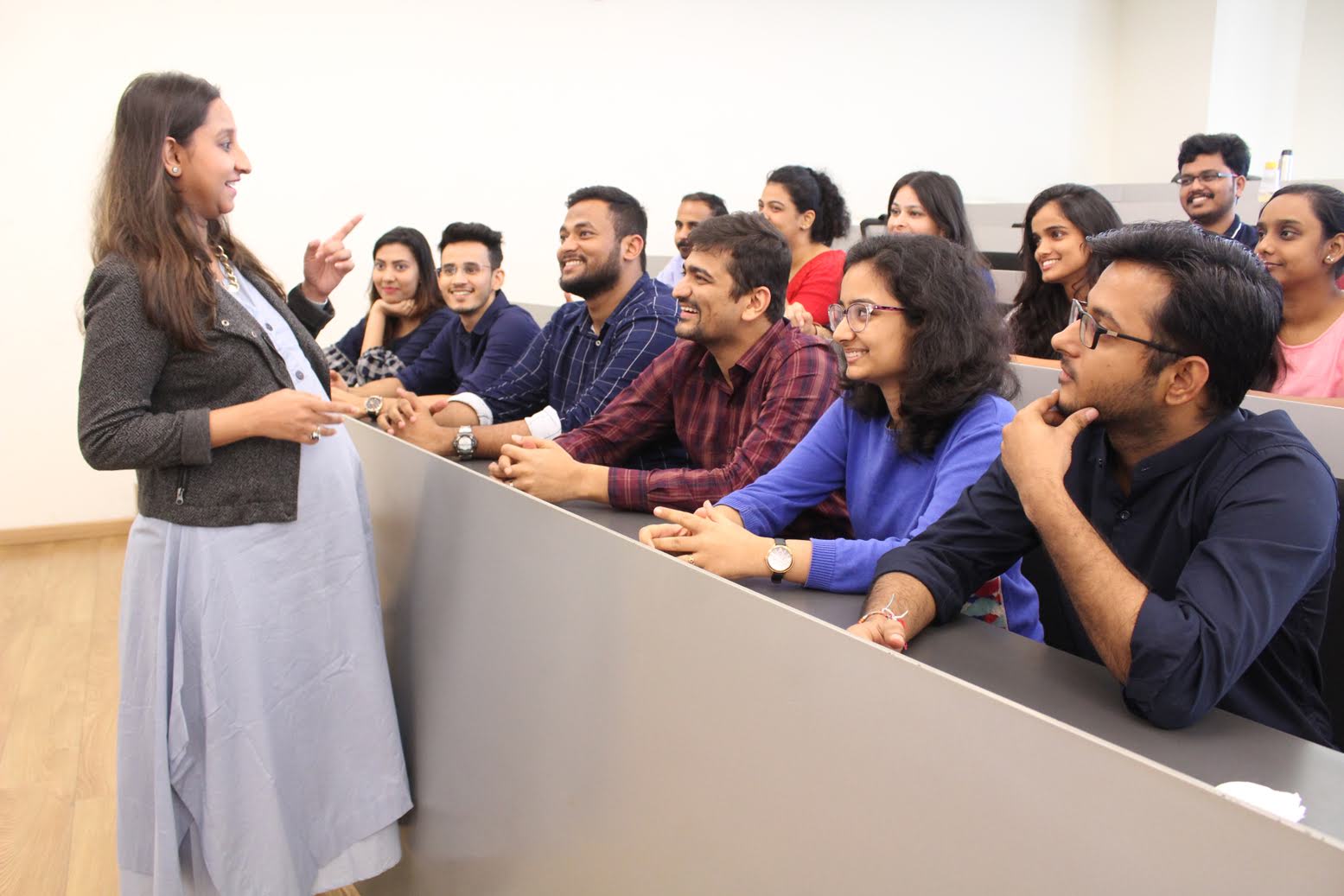
-Milan Choudhury The one thing every MBA student needs to be adept at is tackling interviews. It is primarily the final interview which acts as the make or break™ for a student who prospects for a job or an internship with a prestigious company. But, the interview is not something that can be prepared for in the way you prepare for your exams. There’s no fixed syllabus. But that doesn’t mean you can’t get ready for an interview. There are various areas that you can work on, strengths that you should build up and areas of weakness that you must address. Getting ready for an interview is like getting ready for a date, mainly because of two reasons. The first being, you need to scrutinize yourself, identify what you can leverage on, work on what needs to be fixed and finally, leave the best possible impression behind. The second reason is that you need to have a fairly good idea about the person you are going to meet and their expectations from you. In the case of the job interview, this includes the organization and the alignment of its Job Description with your profile. While preparing for your date may be a solo job, in case of interview preparation, you can certainly be helped. At SDA Bocconi Asia Center, there’s both, expertise and experience to help you deliver the best, as you appear for an interview. Here’s a look at the extensive efforts that are put into getting students ready for interviews, not just on campus but also for life. Grooming and Mannerisms: As we all know, humans form an impression about a stranger within the first few seconds of their meet. The interviewer is, after all, a human being and is subject to all prejudices and biases that humans suffer from. Therefore, it is imperative that you go to an interview dressed impeccably and be as polished as possible in action and behavior. These two factors, although most important from an interviewer’s point of view, are generally ignored by students. They end up messing their interview solely due to the fact that the interviewer formed an initial negative impression about them. At Bocconi, this initial stage is taken care of thoroughly by the Career Development Services. Grooming sessions are conducted separately for boys and girls to address all that needs to be kept in mind while dressing up for corporate meets and the interview. In addition, the right etiquette is demonstrated and practiced to ensure that you form a favorable first impression. Content and Delivery: What you talk is what you are judged upon. Apart from knowing your subject area thoroughly, you also need to take care of other aspects such as grammar, brevity and most importantly, delivery. Prof. Seema Khanvilkar’s Advanced Business Communication address both the content as well as the delivery side of speaking. Each student is prepped and evaluated taking into consideration their personal strengths and flaws and corrections are suggested for improvement. Group Discussions: Often an integral part of the selection process during final placements and internships, a group discussion is something you need to be thoroughly comfortable with. The Career Development Services conducts rounds of GDs to ensure that all students get the hang of the process and are able to deliver at the time of the actual selection process. Additionally, the mock GDs are conducted taking into account each student’s area of specialization. For example, marketing aspirants have GDs conducted in their specific focus groups with relatable topics in marketing, branding, or general awareness. This ensures a thorough simulation that ultimately helps students ace their final GDs. The CDS Bootcamp: The Career Development Services also pays special attention to ensure that all students, irrespective of their backgrounds are on the same level. Bootcamps are conducted which cover the basic aspects of quants and accounting for students from different backgrounds. In addition, essential skills such as advanced Excel are groomed and perfected. The CDS also conducts a Thomas Profiling for students to effectively identify the student specific areas of strengths and weaknesses to ensure a perfect job role fit in the future. Alumni Feedback: Your subject knowledge matters a lot when you sit for the final interviews. This is efficiently tested by mock interviews conducted by Bocconi alumni who themselves are in the industry, with the know-how of what is required from a prospective new-hire. Alumni interviews play a very critical role in preparing the students in advance for the final interview day. The likely questions that may be asked and the correct way to address those are addressed by the alumni. All these resources are more than sufficient to ensure that a student is thoroughly prepped for the final interviews. In addition, peer-to-peer interviews are also conducted to have accountability for the progress made by each individual.
Lessons beyond the Classroom at SDA Bocconi Asia Center

-By Milan Choudhury There’s a world of learning out there that’s beyond classroom sessions and it is especially during the 2 years of your MBA that you can maximize them. In fact, these out-of-class learnings prove to be of far greater importance than the rote learning one is accustomed to, since the real world out there demands skills that can be developed through diverse exposure. Here are some fabulous lessons beyond the classroom, which we at SDA Bocconi Asia Center get to experience. Overall Profile Building: Beyond academics, there are a lot of parameters that companies assess candidates on. In fact, more often than not, it is these parameters that play a key role in the recruitment process. Through various live project opportunities, internships and projects offered by the 4 Centers of Excellence, a student’s profile is strongly built up at SDA Bocconi Asia Center. In addition, the Career Development Services in conjunction with the Placement Committee puts a lot of effort into each candidate’s LinkedIn profile and CV building. Overcoming the Public Speaking Phobia: Every single person exhibits some or the other barrier to communication and it is these that lead to underperformance during interviews. At our lessons and workshops, we are not just encouraged to speak before the class, but are also provided two kinds of feedback. Peer to peer feedback is a definite asset which aims to identify lacunae in content and delivery; while expert feedback given by the instructors provides an in-depth analysis on how each student’s shortcomings may be overcome. The toastmasters club here at Bocconi is one such platform to help students talk freely before an audience. In addition, specialized classes on advanced oral communication ensure that every student is spot on as far as content and delivery is concerned while conducting business communication. Group Driven Insights: Learning solo would’ve worked until you were in your 12th grade, but it strictly limits your ability to learn as you go ahead. At Bocconi, the first thing that the management does is to divide the class into groups, which change every semester. No effort is spared to ensure that each group has people coming from diverse backgrounds and skillset. Class assignments and presentations are group-based and fresh insights are always encouraged. Working in these groups really helps build team work and coordination capabilities. New Cultures to Learn: Business environments are dynamic and navigating them successfully requires one to adapt to changes and get familiar with new cultures. At SDA Bocconi Asia Center, in addition to Indian markets, students are exposed to the European culture and European market scenarios. Cases from all over the world are discussed and latest frameworks and techniques adapted by leaders are taken up for open discussion. The international faculty definitely goes a long way in helping students grasp the holistic point of view. Beyond classes, the ESSEC exchange semester brings in international students, thereby facilitating a healthy cultural exchange between students from India and abroad. Extracurricular Involvement: Apart from academics, there’s a lot more to be experienced here at Bocconi, which makes student life enjoyable. The Cultural and Leadership Committee makes sure that the student talent is showcased in the right manner and is not just restricted within the school. Dance and music, skits and plays, and competitions are an inherent part of student life at Bocconi. In addition, the sports committee ensures that the players get their due by organizing regular matches and tournaments in which the students pitch in wholeheartedly. Aside from the challenging curriculum at Bocconi, there are multitudes of opportunities to help every student build his/her profile the right way for the corporate world as well as the real life ahead. It is ultimately the candidate who has to utilize the right resources from the available plethora.
Legacy vs Modern systems: BTC Conclave at SDA Bocconi Asia Center
The Business Technology Club (BTC) of the SDA Bocconi Asia Center (SDABAC) heralded a new chapter in the series of important events at the campus by organizing the first of its kind- BTC conclave on 16th March 2019. Industry stalwarts from various tech organizations held a very open and informal round table discussion on the topic -Legacy vs Modern systems. The discussion also had the profound presence of Mr. Emanuele Micheli, President at Scuola Di Robotica, Italy and Prof. Paola Bielli, Senior Professor at SDA Bocconi as esteemed panelists. The session had Mr. Atul Jayawant, Group CIO at Aditya Birla Group as the Keynote speaker, who not only helped the session to be immensely insightful but also moderated it to help obtain the objective of the entire session which was knowledge sharing by the core. SDABAC will be forever thankful to the hugely knowledgeable and distinguished invitees who made the event a great success. We would like to thank Mr. Venkat Iyer – Venkat Iyer, EVP & Sales Director, Maistering -Augmenting Masters, Mr. Ashok Dash – Director and Business Head for their India Cluster of countries, Kodak Alaris , Mr. Denis Thomas – Director – Strategy and Innovation at Capgemini , Mr. Deepak Pant – Director – Artificial Intelligence & Analytics at Cognizant , Mr. Ghansham Mhatre – Head – IT Operations at Larsen & Toubro Infotech Ltd (LTI) , Mr. Raj Basu , Head of Product at CreditMate and Mr. Saket Koria , Enterprise Account Manager – Information Security Software & Solutions at IBM for joining us for the session and to share with us their meaningful insights. “Loved the eclectic viewpoints from friends from disparate industries like Manufacturing, IT, Startups and consulting. A very nice forum to exchange views and gather new ideas! Continue having such discussions!” 👍 – Mr. Ashok Dash, Director and Business Head for their India Cluster of countries, Kodak Alaris The session also had a special guest in NAO-a humanoid robot, one of the many masterpieces that Mr. Emanuele has created. NAO kept the invitees captivated by displaying the entire array of his capabilities including greeting the guest and dancing. “The event at SDA Bocconi was quite relevant to today’s digital revolution, where legacy and modern technologies play an important part in deciding the success or failure of a business. The discussion was extremely interesting and brought about different points of views in a simple and effective manner. I must compliment the center for bringing together specialists in their fields and for the excellent organization of the event. While the technology used to play an important role in a business enterprise, today, technology has become the backbone of any enterprise, or in other words, the technology is the enterprise.” Venkat Iyer, EVP & Sales Director, Maistering -Augmenting Masters The institution for the first time hosted an event that aims to further amalgamate the seemingly blurring line between Business and Technology since its inception in 2011 at the only offshore presence of SDA Bocconi in Milan- Mumbai. The Business Technology Club (BTC) as a student-run body strives and aims to empower the future leaders with the technological acumen that is disrupting the business and will continue to do so even more in the future. We at SDABAC look forward to continuing with the motive of, “empowering lives through knowledge and imagination” by organizing similar endeavors in the coming days also.