
Alumni Spotlight: Meet Smiti Mohan, Class of 2014
By now you may be wondering what MISB can do for you. While there’s no way to know exactly how the PGPB can change your life, there are plenty of people who can tell you how it changed theirs. We’re talking about our growing body of illustrious alumni. We’re pleased to be debuting a new series here at the MISB blog: the Alumni Spotlight series, in which we invite alumni to share their thoughts on what MISB means to them. We’re kicking things off by talking with Smiti Mohan, a member of our inaugural graduating class and currently a consultant with Hector & Streak Consulting Private Limited. The Route to the PGPB Smiti became a part of the MISB community in 2011 after considering MBA programs in Europe, Dubai and India. Initially drawn by SDA Bocconi’s repute and high rankings, she was further intrigued by the launch of its first international campus. She explains, It offered the best of both worlds: I got to learn about the global best practices while applying it in the ever dynamic and vibrant Indian context. When asked what prospective MBA students should look for when choosing a program, Smiti puts four things above all else: the school pedigree internationally, quality of alumni network, exposure to international corporates, and faculty profiles. She found each of these and more during her PGPB days. Finding a Home at MISB Looking back on her PGPB days Smiti says, MISB is home to me. The marketeer in me always associates the best brands to feelings, and home is the feeling I have when I hear the name MISB. Why? Because even though it’s been a year since I walked out of those gates a graduate, MISB welcomes me with open arms every single time I go back, like my family would. Smiti also values the strong friendships made during the program — friends, she says, who continue to support each other in extraordinary ways, both personally and professionally. Embracing a Bright Future After multiple offers through MISB’s campus placements, Smiti chose to pursue a career in HR consulting, where she has committed herself to learning everything she can about the business, its clients, and the industry at large. She credits MISB with significantly altering her work process — particularly the extensive soft skills learned, practiced and honed at the international level. Smiti also cites keener insights into the client’s business environment through understanding of key business performance variables and improved conflict management skills as big takeaways from the PGPB experience. She says, I think MISB taught me not only to wear but also walk around in the manager’s shoes comfortably. Today, Smiti takes great pride in being part of the PGPB-1 legacy. When I look back, she concludes, I know I will never be the same individual I was when I first walked through those gates. This is what MISB does to you. It makes you stand with your head held high; proud of your accomplishments, sure of what you’ve learnt, ready to take on whatever life throws at you because of all these people who have your back. If you have any queries or questions about PGPB and Life at MISB Bocconi, please write to Smiti Mohan at smiti.mohan@sdabocconiasiacenter.com
Student Diaries: Aadil Naik’s Three Days in Rome.
Did you know that the Colosseum had a capacity of 75,000 people? Back in 80 AD, they made a stadium that could hold more spectators than most Soccer Stadiums today. 75,000 people watching man battle man or beast. 1900yrs later, I stand silently in what is left of the mighty arena. It is in ruins. But unlike most ruins, this retains its grandness, and more importantly, its ability to intimidate. And that’s what Rome and its ruins do; it intimidates. I’ve been fortunate enough to see most of India’s historical sights, and most of the world too, and while they exude unbelievable amounts of skill, none come close to the grandeur and scale that the Roman ruins hold. Roman history is something most of us are moderately acquainted with. It had a lot of dramas, a lot of wars, and just made for nice movie and game scripts. You know those movies, where they keep showing you flashbacks of the same area? That’s what it felt like when I entered the Roman Forum on Palantine Hill, historically the hill where Rome was born; and later the center of the city and its affairs. You can picture senators marching along in their robes, commoners selling bread in what was the marketplace, and the priests on the stairs of the Temple of Apollo. It got intense when I saw the place where Caesar was murdered. And on to the pulpit where Octavius gave his legendary speech (thank you Shakespeare). Trust me, you will get lost in the history. Over the course of 3 days, I saw pretty much all there is to do in Rome with a couple of friends. We stayed in a lovely and quaint little hostel and walked everywhere. We didn’t use a single bus/tram at all and walked close to 15km a day, which might seem a lot but there was always something to visit in short enough distances, so it was ok. I would refrain from calling Rome a tourist destination. Yes, it makes for great pictures, and not a lot of things can get you the response that a Facebook check-in at the Colosseum can get (I got over 100 likes. That’s a lot when you are a male); but for most people, every ruin looks exactly like the previous one, and that gets annoying. What Rome is, though, is a history buff’s paradise. If you like your history, and seeing a broken column where a Temple stood makes you tingle; then you should sell your left kidney to make a trip here. The walls (what’s left of them) are alive with it. Yes, there is skill in their construction, but it is the stories and the legends behind every brick that got me going. Three days later I understood what The Glory of the Roman Empire meant. You think you feel small standing in front of a 100 storey building? Wait till you stand in front of that Colosseum. Now imagine that same feeling back in 80 A.D. And they made that for entertainment! Whew. In conclusion, this place is steeped in legends. It is one of the few places where you can see not just the important structures, but the not so important ones that communicate culture. I’m not going to list out the places I saw individually; you have Google for that. What I can do is tell you this, If you enjoyed Shakespeare’s Julius Caesar, you should love this. If you didn’t, you are wasting your time. Aadil Naik is a PGPB3 student and is currently in Milan, Italy for his 4-month specialization Semester at University Bocconi.
2 Friends, IIT Roorkee and 99 Percentile in CAT
Every business school aspirant dreams of getting 99 percentile in CAT, one of the most coveted management exams in India. However, only a handful of people realizes this dream. What drives these people? What motivates them? What does it take to be in the top 1 percent of India? Meet Nagendra Rawat and Yogesh Mehra, who would unveil these answers for you, and more! Nagendra and Yogesh are best friends from their engineering days at IIT Roorkee. Post their graduation, Nagendra started working for an infrastructure design firm followed by a political consultancy, and Yogesh for a civil consultancy. They both were extremely motivated about bagging a degree in business, but their approaches to that goal were poles apart. Presently they are pursuing their Post Graduation from MISB Bocconi Bocconi India, and love each moment there! When did you start your preparation for CAT? Yogesh: I always knew I wanted to do an MBA, so after a few years of working I decided, it is the right time to start with my preparation. As I was working simultaneously, I had limited time for preparation, so I made it a point to start early. Nagendra: Just like Yogesh, even I always wanted to do an MBA. Hence, I took CAT in 2013 and got a 98.98 percentile. However, I did not want to settle with that score, so I started studying right after the CAT result in January 2014. What was your strategy while studying? Yogesh: Systematic and structured scheduling was my strategy. I spent most of my time doing exercises rather than studying the concepts in these two areas. I devoted ample time to the verbal ability section to achieve the same degree of proficiency I had in the other sections. I finished my syllabus in September and invested the remaining months in taking mock tests, as that is an essential part of one’s preparation. Nagendra: My strategy did not have a strategy. I did not plan on what to study or have a schedule. I studied what I fancied that day, changed subjects when I thought I was getting saturated with one. I practiced only by the medium of mock tests, as that improved my accuracy as well as speed. Any cheat sheets that you could give to our aspirants? Nagendra: This is a trick that both Yogi and I followed, we made a special notebook in which we noted down each question that we felt was difficult, or applied a concept in a different way. Right, before we gave any mock tests we would go through this notebook. This was an excellent way to learn from your mistakes or keep a tab on all aspects of a concept. What were your mistakes while studying for CAT? Yogesh: I can speak on behalf of both of us about this. Being from one of the best institutes in India, you have a set standard in your head for your self. So while giving the mock tests we were very hard on ourselves, we developed ego issues with questions. We used to make a big deal out of missing out a single question in a test! Nagendra: (Laughing) I would just like to clarify, we both still attempted all questions in CAT hence we do not have bruised egos! Did you ever expect to get a 99 percentile? Yogesh: At the risk of sounding pompous, I knew I was getting a 99 percentile on the tenth question I attempted in the test. I would attribute this confidence only to my level of preparation and hard work and nothing else. Nagendra: By now you would know that I am not a thinker, hence I did not expect anything. Though, I was pleasantly surprised when I saw my score. What calls did you get? Yogesh: MISB Bocconi, New IIMs, FMS, MDI, JBIMS Nagendra: MISB Bocconi, XLRI, New IIMs, FMS, MDI, JBIMS What is your advice to the future aspirants? Yogesh: I would like to tell everybody to assess himself or herself. Do not follow anyone else’s strategy blindly. Each person is different and has different strengths and weaknesses. Make your own strategy. Nagendra has got the same score as I have, however if I had followed his strategy I wouldn’t have been where I am. Nagendra: Absolutely! Study hard and study smart. You can’t be accurate or fast, you need to be both! Why did you choose to join MISB Bocconi? Yogesh: MISB Bocconi is the only offshore presence of University Bocconi Milan which is one of the oldest and the most prestigious European University. MISB Bocconi’s Faculty comes from SDA, professors like Robert Grant the management guru of strategy, and guest lecturers from around the world visit the campus ! Further the exchange semester at Bocconi, Milano is an opportunity I did not want to miss out. MISB Bocconi believes in granting tuition waiver to all those who get an impressive score and have a strong profile. I received a very good tuition waiver. Hence, MISB Bocconi is a perfect choice for me. Nagendra: I agree with all the points put forward by Yogi. Besides those, I would like to add that the teaching methodology is in line with any international business school. The studies focus more on the application, teaching through case studies, lectures by guest faculty, etc. Also, lecturers from all prestigious business schools in India come to teach us different courses. It is like we have the best of both the worlds! Being situated in Mumbai, we get exposure to a lot of opportunities and do live projects, intern or work in the industry. DOWNLOAD BROCHURE This Post first appeared on InsideIIM
Bocconi Test: Here’s What You Need To Know
Once you’ve submitted your application to the IMB at SDA Bocconi Asia Center, you may be prompted to take our internal exam, the Bocconi Test. Wondering whether you need to take this exam, and what is involved, if you do? Here’s more:
Student Diaries – The Cocktail in Class

A PGPB cannot just be about academics. If it is, you are doing it all wrong. I wanted my PGPB to make me a good manager, and this cannot be taught only by theory. I needed to know the practical application of whatever I learnt. The best way to do this while doing my PGPB was to become a class representative; a daily dose of management as a student. A class representative (CR) is a person who acts as a link between the class and the college management. In short I have to deal with 57 opinions, gather consensus and take it to the management and negotiate with them for the class. At the same time, the rules or notices by the management have to be made accepted by the students. Hence, the cocktail. Let me elaborate on my Cocktail journey between the management and the class at MISB! I stood in the internal class elections for becoming the CR along with three other colleagues. Through a democratic voting, I was selected. Everything was perfect; my Post Graduation started as I wanted! It all started with a bang, a series of responsibilities started to come on my shoulders. From maintaining attendance to having heated case study group discussions, juggling between friends, groups; management and personal commitments were now integral to my life. I was everybody’s go-to person. Being a CR is equivalent to being a cocktail. You are a mix of decisions and suggestions flowing from your class and the management which are the main ingredients of this cocktail. You need to be the perfect blend of both. There is no doubt in the fact that the subjects I’ve learnt so far have helped in this journey as a CR. Marketing groomed my negotiation skills to get people to listen to me, which is of utmost importance. Organizational Design and Behavior helped me in dividing the classes into groups, structuring the group format and pooling in the competencies of all students in an equitable manner. Managerial Accounting made me a better accountant; I kept a solid account of the class funds and knew where to spend how much. However, Human Resource Management taught me the most important life skill, to deal with opinionated people and find a common way. Being an autocratic leader is the easiest but the worst thing to do. Being a democratic leader is difficult, but the best way manage. Hence being a CR is my journey of being a democratic leader, a good manager and a loved classmate. There are so many twists that a little of either of the ingredients can ruin the cocktail. It has been delicious and addictive so far, and I hope it gets me as drunk as possible (On knowledge you guys! Haha) Shradha Varma is a PGPB4 student and the Class Representative.
Faculty Diaries: Corporate Finance – Cornerstones in Valuation
By: Leonardo Etro – Professor of Corporate Finance Some focus very little on valuation while others think valuation is “The Thing,†the only one that matters in putting capital at risk in an investment. Honestly speaking, valuation is essential in Finance. Why? Because eventually any business is worth the amount of free cash flow it can generate over its life, that is it.  Imagine you owned a grocery store, and your time machine ball told you it will generate EUR 100,000 of cash flow per year for the next 20 years, before shutting doors. This means that over its entire life, that store would allow you to cash EUR 2 million into your pocket. If you just skip for a moment the time value of money, the store’s intrinsic value is EUR 2 million. A potential buyer of that business – on condition he’s equipped with that same time machine – would never agree to pay more than $2 million for your grocery store, as he would obviously end up with a loss. The buyer probably wouldn’t pay $2 million for that business, either. So, a potential buyer would only buy the store for less than $2 million. There are no time machines around, indeed. By definition, estimating the cash flow of a company over its entire life is an inaccurate exercise at best. It can be an easier task to do for mature and stable companies, while almost impossible for start-up, high-growth businesses. Regardless the company, though, we must at least make some educated guesses in estimating cash flows and value. More often than not, picturing out different scenarios – such as optimistic, moderate, and pessimistic – is a mind-clearing process. We all know that no analyst is going to be exactly right in valuing a company. Still, it’s much better to be vaguely right than… exactly wrong! This is precisely the reason we need a framework to help us make decisions, even if that framework is not 100% accurate as we’d love it to be. The alternative is having no framework at all: and this is the difference between gambling and investing. Don’t forget that for valuation purposes, there is no difference between a pop-and-mom grocery store and a mega-cap, publicly traded company. Regardless whether a business is private or listed, a value is value. Obviously so, no rational individual would be willing to pay more for business than what it’s worth. On the contrary: he would be actively looking for companies then come for less than what they are truly worth. Sometimes, investors in public companies just stick to prices’ and volumes’ movements. Don’t fool yourself around: always secure yourself back to cash flow and valuation. It’s time to add an extra trouble in our framework: time value of money. This is an extremely relevant point. We must acknowledge that the EUR 2 million that the grocery store will produce over its life is not worth EUR 2 million today. There is a time value of money – a.k.a. “present valueâ€. When we perform a discounted cash flow analysis, we are estimating a business’s cash flow for its entire life, and then we apply a discount rate to that cash flow, to establish what it’s worth in today’s money. Why? Because if we decide to go for it now, then we have to pay for it now. So, the discount rate is relevant. Rather than an inflation rate or anything the like, investors often use a number that represents their required annual rate of return. What does this mean? It means that as long as we buy the business – or its listed shares – around the output value of the discounted cash flow calculation, we’ll manage to earn our required rate of return. Obviously so, it’s far better if the business – or its listed shares – overcome by large our valuation estimate. This provides us with a cushion, which is widely known as “margin of safety.†This represents the room we give yourselves to be wrong (likely) or not completely precise (certain) in our estimates. Even if our valuation estimates prove out right over time, we’ll have the following lovely “problem†to handle: the margin of safety will allow us to earn a rate of return that’s higher than the discount rate. So far, we’ve been talking about buying. Some words on the opposite play (selling, or even not buying; in short, folding) are deemed. Selling or not buying a business – or again, its shares – is a good move, when the business’s appreciation potential already locates behind its shoulders; or, if the downside potential has become significantly larger that the upside potential, or, if we can identify other investments that offer greater return potential as compared with risk. This does not necessarily mean that the business or the shares we sell – or not buy – will never get higher. It means that our analysis highlights limited appreciation potential and too much risk. Selling, or not buying, is just as inaccurate as buying, given that it is grounded on valuation as well.
Student Diaries: The Premier League Football Review
As the Normal One sat in the dugout for his first Premier League game, the Special One who was under intense scrutiny got Chelsea their third win this game week. This weekend was all about the fight between the title contenders and their immediate rivals. As United unexpectedly strolled across at the Goodison, Arsenal showed their supremacy at Watford. The following were some of the key takeaways this weekend from the world of the English Premier League. Tottenham V Liverpool: This was the game that was spoken about the most this weekend. J¼rgen Klopp taking over the reigns at Anfield raised strong positive opinions from the Kop supporters. Liverpool started the game on a high. The first 20 minutes Liverpool pressed high up the pitch and made life difficult for Tottenham, but it was the second half in which the game opened up with both sides creating a handful of chances yet both the sides failed to hit the back of the net. Liverpool is a big club and with the history they have, it is critical for English Football that the Kop wake up from an extended spell of hibernation that has seen the club go into a steep decline. With the determination of Klopp and a strong financial backing from the owners, I as football supporter hope to see Liverpool competing for top honors next season. Everton V Manchester United: With Arsenal having slammed Manchester United last weekend, Louis Van Gaal’s United had a point to prove to be considered genuine title challengers and the convincing margin of the 3-0 victory at Goodison must have lifted the dressing room. David De Gea was yet again excellent, but the player to watch out for United was undoubtedly Ander Herrera. Playing in the number 10 role, Herrera displayed great vision by creating a plethora of chances and also by scoring Manchester United’s first headed goal of the season. Everton, on the contrary, could not lift themselves over the sad and unexpected demise of their great manager Howard Kendall. With United playing with a 4-2-3-1 formation, and Rojo at left back, Roberto Martinez made a tactical blunder playing in Lennon instead of the in-form Deulofeu. Most football pundits got this result wrong. Watford V Arsenal: Arsenal having outplayed Manchester United comfortably last weekend came into this match with a lot of self-belief and their talisman Alexis Sanchez did not disappoint the Gunners supporters. Like last weekend, Alexis scored a brilliant goal that took his goals tally to 6 goals in 8 starts this Premier League season. Watford under Quique S¡nchez Flores were good in different short periods of the game but did not manage to threaten Cech during the game. With this convincing win, the Gunners held on to their 2nd place in the table after 9 games with 19 points, 2 points adrift of leaders Manchester City, who won 5-1 in the early kick off against Bournemouth. The Premier League Table after Gameweek 9: Image: Premierleague.com What to expect during the mid-week? With the UEFA Champions League returning during the mid-week, Arsenal facing the German champions Bayern Munich, United traveling to Moscow and City facing Borussia Mönchengladbach, the English clubs would again be under intense scrutiny because of the drop in the ranking coefficients for the clubs. My predictions for the mid-week are as follows: Arsenal V Bayern Munich: The Bavarians have won all 9 of their German Bundesliga games and come to the Emirates in a rich vein of form. Guardiola’s men have nothing to fear about against the Gunners. It remains to be seen if the Gunners can reciprocate the form they displayed against Manchester United. But this would be a mouth-watering clash for any football lover. My Prediction: 1-3 CSKA Moscow V Manchester United: Louis Van Gaal’s men have dropped points against PSV Eindhoven and after a not so convincing game against Wolfsburg, the Red Devils will be looking to strengthen their position in the group. CSKA Moscow defense has leaked goals right through this season, and they will have to play out of their socks if they are to get away with anything this mid-week. My Prediction: 1-2 Dynamo Kiev V Chelsea: Jose Mourinho’s men still don’t look convincing, and this is a difficult match for a team that has struggled for form this season. Kiev, who lies 2nd in the Ukrainian League would give a tough fight to Londoners, but I think Chelsea have enough quality to go over the line in this one. My Prediction: 1-2 Manchester City V Sevilla: Manuel Pellegrini’s men were incredible this weekend against Bournemouth, and I expect them to sail through this one. City even without Aguero and Silva has played remarkably well, all thanks to the two new signings, Raheem Sterling, and Kevin De Bruyne. With captain Kompany expected to return for this tie, I expect City to win this one comfortably. My Prediction: 3-1 ————————————– This article is written and prepared by Abhishek Sharma of PGPB4 in his personal capacity. The opinions expressed in this article are the author’s own and do not reflect the view of MISB Bocconi.
How MISB Bocconi’s PGPB Equips You for Real-World Impact.
With so much buzz surrounding the 21st century skills gap — particularly as it applies to today’s business school grads-turned-job candidates — you may be wondering how the PGPB can help you not only expand your knowledge, but also apply this knowledge to today’s complex business challenges. In fact, this is one of the aspects that makes an MISB Bocconi education stand out from the rest. Let’s take a closer look at how we not only cover the business fundamentals, but also how they translate to real-world innovation. International Exposure As the international barriers continue to break down, tomorrow’s leaders will require global perspectives which transcend geographical borders. The PGPB brings together students and faculty not only from throughout India’s diverse states but also from all over the world in the form of inbound and outbound exchange programs. The result? A distinctive multicultural atmosphere and vibrant international outlook among the members of our community. Soft Skills While all b-schools teach business theory and basic principles, cultivating true innovation takes something more. In addition to traditional business school studies, the PGPB places equal focus on writing and communication, technical know-how, creativity, critical thinking, understanding organizational structure and other soft skills essential to contemporary business success. These are precisely the skills that today’s employers are looking for when identifying what they need to reach their goals. How do we teach these soft skills? Through resources including personal orientation labs which help students assess their personal aptitudes; core courses on oral and written business communication; and training seminars on everything from public speaking to business and social etiquette. Real-world Indian and international case studies, meanwhile, offer a dynamic fusion of theory and practice which not only teaches students what they need to know, but also how to most effectively apply these principles to the world around them. But we don’t just bring the case studies into the classroom; our students also benefit from strong connections with the corporate world through compulsory hands-on experiences and initiatives. Information Exchange Speaking of corporate exposure, the MISB Bocconi student experience is steeped in opportunities to learn from today’s top business leaders and innovators. In addition to our leading international faculty from SDA Bocconi, PGPB students also gain access to visiting guest speakers and summer internships — all aimed at helping them gain valuable insights and a critical leading edge. At MISB Bocconi, we know that education doesn’t take place within a vacuum, but within the context of the world at large. PGPB students aren’t mere observers; rather, they’re participants in a problem-focused and experiential learning environment aimed at helping them achieve game-changing potential as the next generation of business innovators.
Student Diaries: The Metamorphosis Of A Post Graduate Student
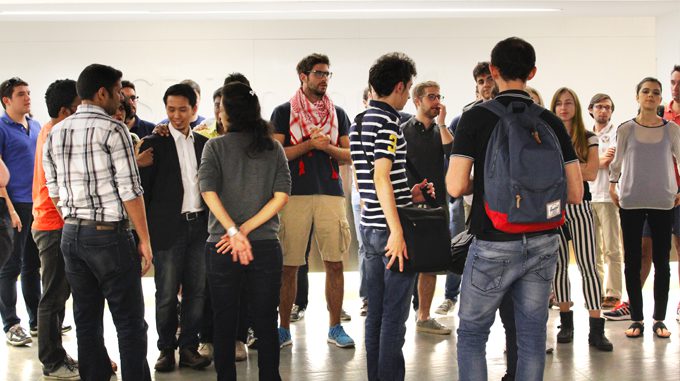
At MISB Bocconi, we often say, do not expect the expected. When I was enrolling for the Post Graduate Program in Business (PGPB), little did I know, that it would unveil different sides of me and make me discover that a business program can impact one’s life more than what we expect it to.
Delivering an International B-School Experience in India – SDA Bocconi Asia Center
With India having staked its claim as a major player in the world economy, the imperative is clear: the country will need innovative business leaders to help it navigate the tricky terrain ahead.